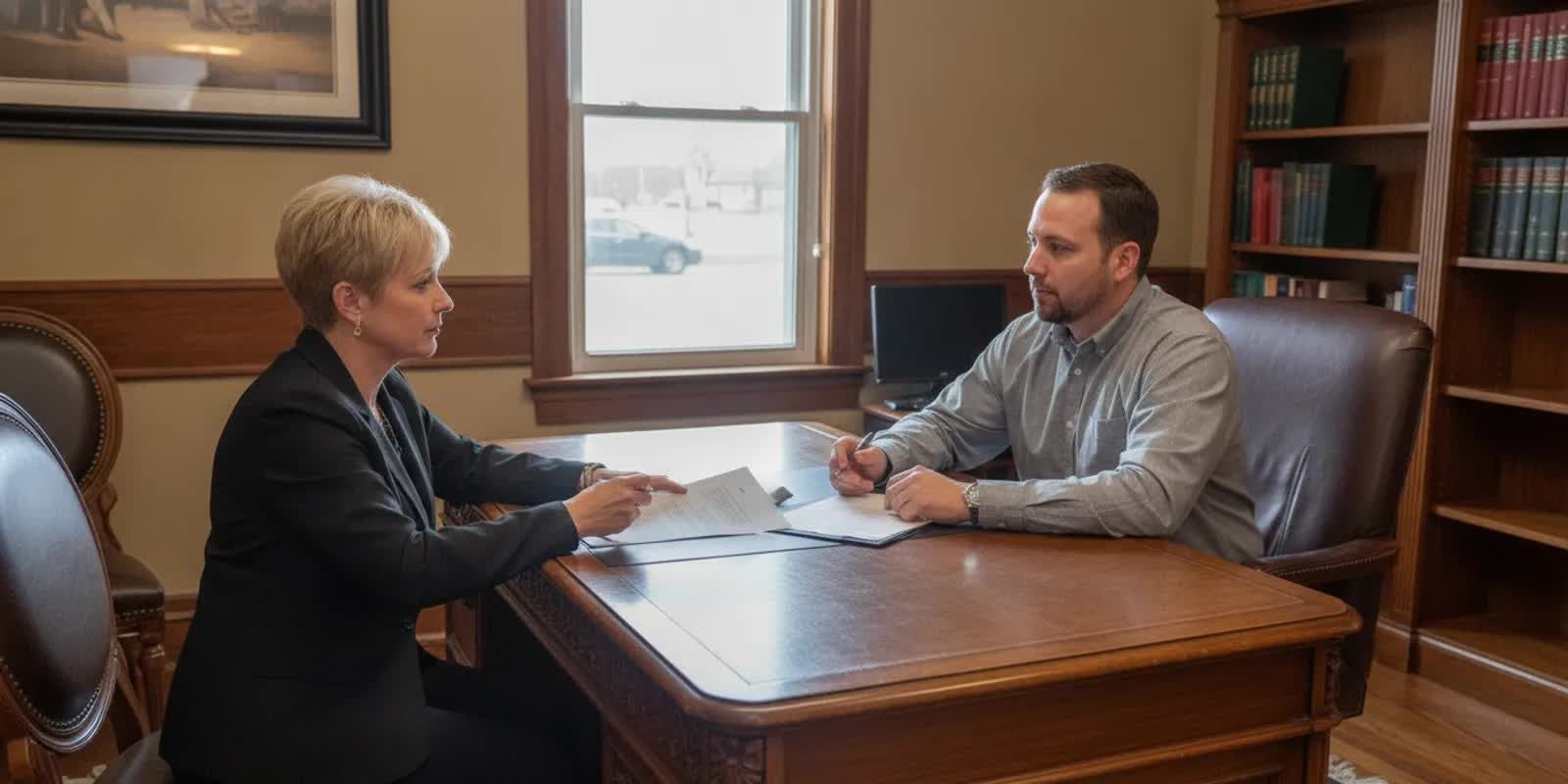
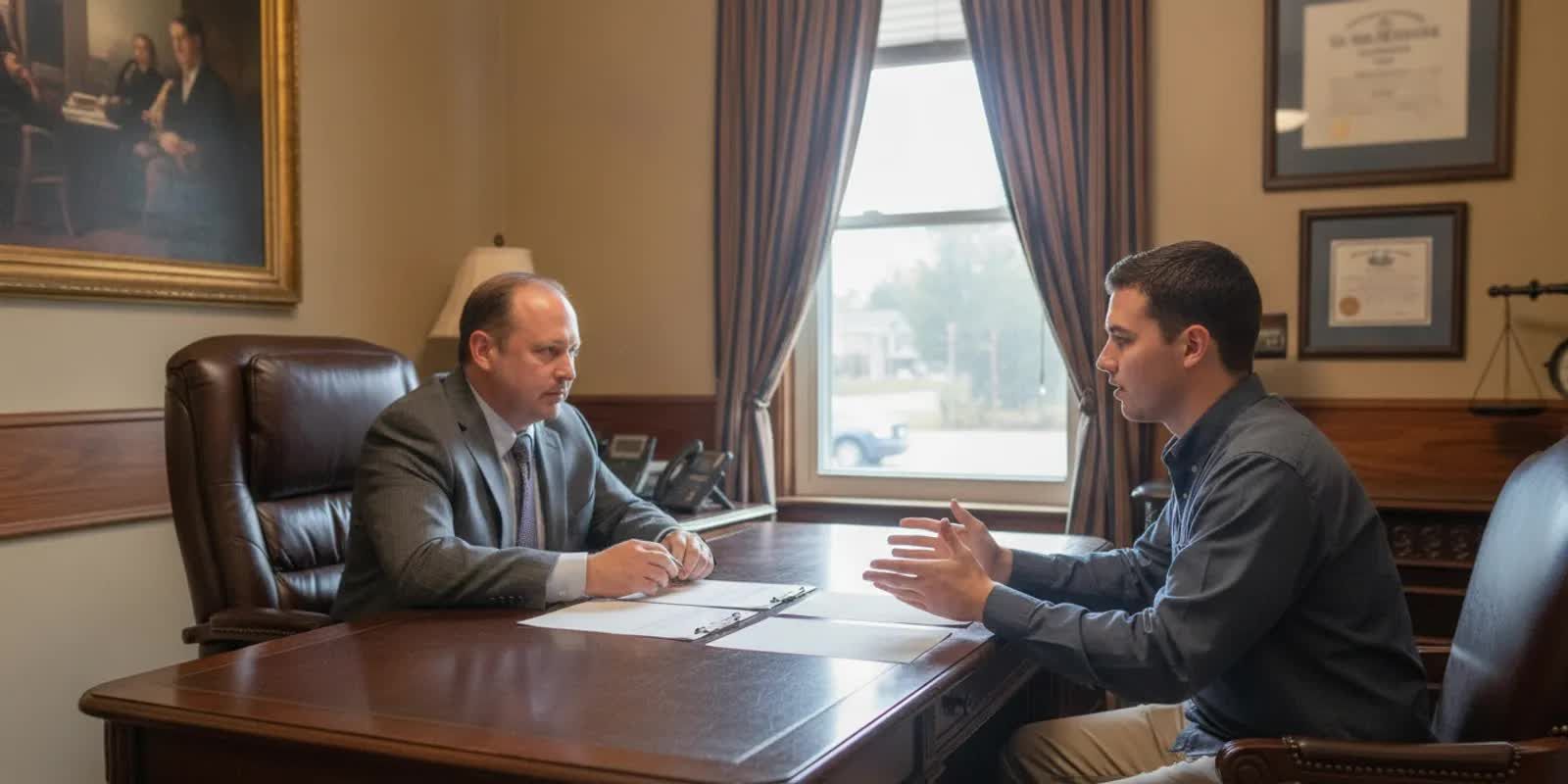
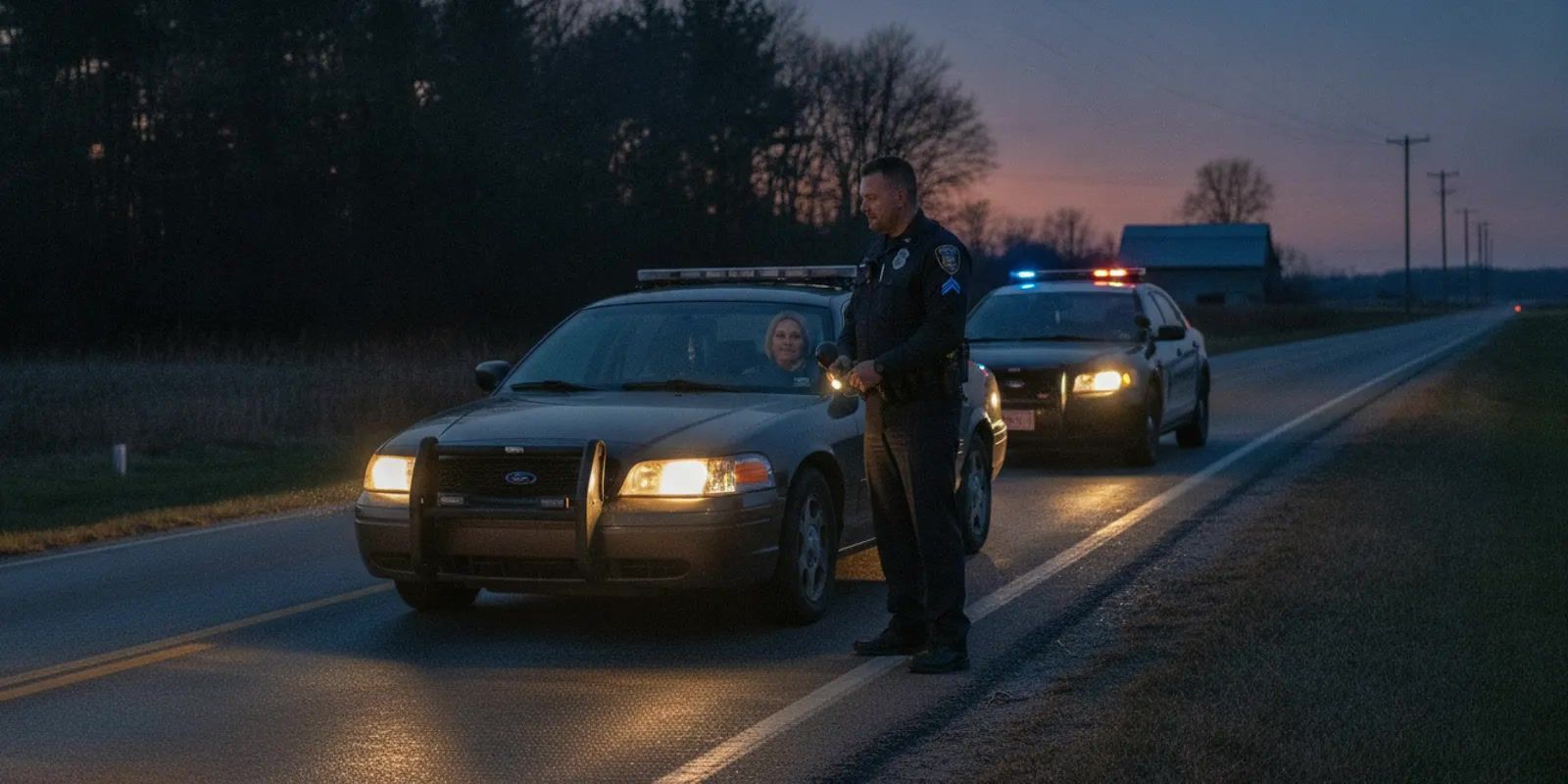
People ask about distracted driving vs drunk driving Michigan because both can start with a traffic stop, and both can feel like the same kind of trouble. They are not. Holding a phone while you drive is a civil infraction under Michigan's hands-free law. Operating while intoxicated, or while visibly impaired, is a criminal allegation. The ticket, the court, and the license questions do not line up.
Call the number on the contact page
for a free consultation if the stop involved alcohol, drugs, or a chemical test. Boulahanis & Associates reviews that kind of case from its Dearborn office.
This is general information, not advice about your stop. Outcomes depend on the facts. The firm tries to get each client the best result the circumstances allow. It does not guarantee a result.
Two Allegations in Distracted Driving vs Drunk Driving Michigan
Start with the paper you were handed. A distracted-driving stop under Michigan's hands-free law is about a phone or other mobile device. An OWI stop is about alcohol, a drug, or another intoxicating substance, or about a chemical-test number.
Michigan State Police describe three kinds of distraction: visual, manual, and cognitive. Eyes off the road, hands off the wheel, mind off the drive. Texting hits all three. The hands-free law, Public Act 41 of 2023, took effect June 30, 2023. It is now MCL 257.602b
of the Michigan Vehicle Code.
For an ordinary driver, that section says you may not hold or use a mobile electronic device while operating a motor vehicle. Use covers a call, a text, a video, social media, the internet, and typing into GPS. A mounted phone is not a free pass. More than a single touch, tap, or swipe is still use. Being stopped at a light still counts as operating. A legal park does not.
There are narrow exceptions. A 911 call or text to report a crash, a hazard, a crime, or a driver who appears impaired is one of them. Voice-operated or built-in hands-free use is another, if your hands stay off the device beyond that single touch. Those exceptions are written into the statute. They are not a general permission to scroll.
A violation of subsection (1) is a civil infraction, not a crime. For a first violation the court must order a $100 civil fine, 16 hours of community service, or both. A second or later violation is $250, 24 hours of community service, or both. If the driver is at fault in a crash, the civil fine is doubled. Three or more violations of that subsection within three years can bring an order to complete a basic driver improvement course. Commercial drivers and school-bus drivers face a stricter rule and higher civil fines.
None of that is a jail sentence. None of it is a criminal conviction. A phone ticket can still matter to insurance and to a driving record, and a crash can raise separate civil claims. It does not, by itself, become an OWI.
What an OWI or Visibly Impaired Charge Adds
Operating while intoxicated is a crime under MCL 257.625. The statute covers three ideas. One is being under the influence of alcohol, a controlled substance, another intoxicating substance, or a combination. Another is an alcohol content of 0.08 grams or more per 100 milliliters of blood, per 210 liters of breath, or per 67 milliliters of urine. A third is 0.17 grams or more, the high-BAC level people often call super drunk. The same section also covers operating while visibly impaired, which is a lesser allegation with its own proof.
Michigan State Police publish a first-offense snapshot. These figures are statutory maximums and program rules. They are not a prediction of what a Wayne County judge will do in one case.
- Under 0.17: up to a $500 fine, up to 93 days in jail, and up to 360 hours of community service.
- The same snapshot lists up to 180 days of license suspension and 6 points.
- At 0.17 or higher: up to a $700 fine and up to 180 days in jail.
- That higher level also lists a longer license action, alcohol treatment, and ignition-interlock rules before a restricted license.
A prior conviction, a crash with injury or death, a minor in the car, or a high test result can change the charge and the exposure. That is why a phone-ticket chart is a poor guide to an OWI file. The drunk driving defense
page is the place to read how this firm approaches the criminal case. This article stays on the comparison.
Boulahanis & Associates, established in 1989, focuses on OWI and DUI defense, implied-consent violations, and hardship-license matters in circuit court. The office is at 21905 Garrison Street in Dearborn. The work covers Wayne County outside Detroit, including Dearborn and Canton Township, and it also covers Monroe County. Nearby communities named on the site are part of that service area. They are not extra offices. Greg Boulahanis is the attorney. After someone is retained, clients get his cell number. The firm no longer handles license restoration.
How the Two Cases Move Through Court
A civil infraction and a criminal charge do not share a calendar.
| Question |
Hands-free phone violation |
OWI or visibly impaired |
| What the state alleges. |
Holding or using a mobile device while operating. |
Operating under the influence, at or over 0.08, at 0.17, or while visibly impaired. |
| Case type. |
Civil infraction. |
Criminal charge, often a misdemeanor, sometimes a felony. |
| Typical first exposure. |
$100 fine, 16 hours of community service, or both. |
Jail exposure, a larger fine range, points, and a license action. |
| License. |
No automatic OWI-style suspension from the phone ticket alone. |
Suspension or restriction can follow a conviction or a separate refusal. |
| Chemical test. |
Not part of the phone statute. |
Breath, blood, or urine results are often the center of the file. |
Read that table as a map, not as a sentence. Local court practice still varies. A civil infraction can be paid or contested in the district court that wrote it. An OWI file can include an arraignment, a pretrial, motions, and a trial or plea in the court that has the criminal case. Which court that is depends on where the stop happened and how the charge is drawn. The Michigan DUI court jurisdiction
overview covers that question without turning this post into a court directory.
The charging paperwork is its own step. A citation for a phone is not a criminal complaint. An OWI accusation moves through the charging process the prosecutor and the court use for crimes. If you want that sequence in plain language, see the Michigan DUI charging process
article. Do not assume a civil ticket and a criminal charge will be heard on the same day, by the same judge, or on the same standard of proof.
When a Phone Stop and an Alcohol Stop Overlap
The hard cases are the ones that start as one thing and become the other. An officer can stop a car for a hands-free violation because that violation is a primary offense. Michigan State Police say an officer may stop and ticket for holding or manually using a phone. Once the window is down, the officer may notice an odor, slurred speech, bloodshot eyes, or an open container. Those observations can turn a civil stop into an impaired-driving investigation. The phone ticket does not disappear just because a criminal investigation starts, and the criminal case is not proved just because a phone was in someone's hand.
The reverse happens too. A stop for weaving or speed can include a question about a phone, and the alcohol or drug facts can still be the charge that matters. Eating, talking to a passenger, or looking at a child in the back seat can be careless in an everyday sense. They are not, by themselves, the hands-free violation, and they are not an OWI.
If a crash is part of the story, keep the files separate in your own notes. Fault in a crash can double the civil fine under the hands-free law. Injury or death can raise the criminal charge under the OWI statute. Those are different legal theories. A police report that mentions a phone does not tell you which theory the prosecutor will use.
Ask for the citation, the criminal complaint if one exists, and any notice from the Secretary of State. Write down the date, the location, and whether anyone asked for a breath, blood, or urine test. Bring that stack to a review. Guessing from a roadside conversation is how people mix up a civil ticket with a crime.
Chemical Tests and the Separate License Track
A hands-free ticket does not ask you to blow into a machine. An impaired-driving investigation often does. Michigan's implied-consent law is the reason. It is a separate track from the criminal charge. Refusing a chemical test can trigger a license action even before anyone is convicted of OWI. Michigan State Police state that a first refusal brings a one-year license suspension, and a second refusal within seven years brings two years. That refusal case is not the same lawsuit as the criminal case, and hiring counsel for one does not automatically cover the other.
The Michigan implied consent law
article walks through that split. Deadlines on a refusal notice are short and fact-specific. Do not treat a blog post as the clock. If a notice is in your hand, have a Michigan lawyer read it.
Test results raise their own questions. A roadside portable breath test is not the same device as the evidential test at the station or the hospital. How the sample was taken, stored, and reported can matter in the criminal case. The firm's writing on portable breath test reliability
is the deeper page for that issue. This comparison only needs the boundary: if no one asked for a chemical test, you are probably looking at a traffic or civil problem, not an OWI file. If someone did ask, read the paperwork before you decide it was "just a ticket."
License consequences follow the same split. A civil phone fine is not the license suspension that follows an OWI conviction or a refusal. A first-offense public summary lists up to 180 days of suspension under 0.17, and a longer action at 0.17 or above. What you can drive, and when, depends on the order and on any restricted-license rules in that order. The first offense DUI lawyer
guide covers the first-charge criminal path. It is not a substitute for reading your own notice.
What to Pull Together Before a Case Review
Sometimes the only paper is a civil citation under the hands-free law. If there is no alcohol, no drug, and no chemical test, this firm is not the lawyer for that ticket. Boulahanis & Associates does not hold itself out as a traffic-ticket practice. The criminal work is OWI and DUI defense, including first charges, repeat charges, and felonies, plus breath and blood issues.
Call when the facts point at impairment. A useful review starts with documents, not with a retelling from memory alone. Collect these before you call:
- The citation and any criminal complaint, including the statute numbers printed on them.
- Any Secretary of State notice, especially a refusal or suspension notice, and the date you received it.
- Crash paperwork, if there was a collision, and the names of any other drivers.
- What test you took or refused, and where it happened: roadside, station, or hospital.
- The court name and the next date, if one is already set.
Wayne County district and circuit courts, and Monroe County courts, do not all use the same scheduling habits. The location of the stop decides a lot. Service-area pages on the site describe communities. They are not extra offices. There is one published office, in Dearborn.
A free initial consultation is a phone conversation about whether the firm can help. It is not free representation, and it is not a booking link. The act immediately
page is the right next read if a notice is already in the mail. Calls go to the attorney, not to a call center.
Frequently Asked Questions
Is distracted driving just as bad as drunk driving in Michigan?
On the road, both can cause a crash. In court, they are not the same allegation. A hands-free violation is a civil infraction. Operating while intoxicated or while visibly impaired is a criminal charge with jail exposure and a separate license track. Risk on the highway is not the legal classification.
How much is a distracted driving ticket in Michigan?
For an ordinary driver, MCL 257.602b sets a first violation at a $100 civil fine, 16 hours of community service, or both. A second or later violation is $250, 24 hours, or both. The civil fine doubles if the driver is at fault in a crash. Commercial and school-bus violations use higher amounts. Court costs can sit on top of the fine. This is not an OWI fine schedule.
Do you lose your license immediately after a DUI in Michigan?
Not from every stop, and not in one automatic way. A conviction can bring a suspension. A chemical-test refusal can bring its own suspension, including one year for a first refusal, under the summary Michigan State Police publish. A civil phone ticket does not trigger that refusal suspension. Read the notice you actually received, because the deadline and the order control.
Can a cell phone stop turn into an OWI investigation?
Yes. The hands-free violation is a primary offense, so an officer can stop the car for the phone. Observations after the stop, such as odor or coordination, can lead to impairment questions and a request for a test. The phone citation and any criminal charge stay separate cases.
What is the 77 day rule in Michigan?
People use that phrase for different license and court timing questions, and it is not a rule this comparison can pin to one statute. If a letter gives you a number of days to ask for a hearing or to appear, the date on that letter is the one that matters. Have a lawyer read it rather than matching it to a nickname online.
When to Call About the Criminal Case
If alcohol, a drug, or a chemical test is part of the stop, call the number on the contact page
for a free initial consultation. Ask for a drunk driving defense
review of the criminal file, and keep any implied-consent notice in the same stack so the two proceedings are not mixed together.
Bring the citation, any complaint, and the Secretary of State paperwork. A phone ticket alone is a civil infraction. An OWI allegation is the case this Dearborn firm is built to review.