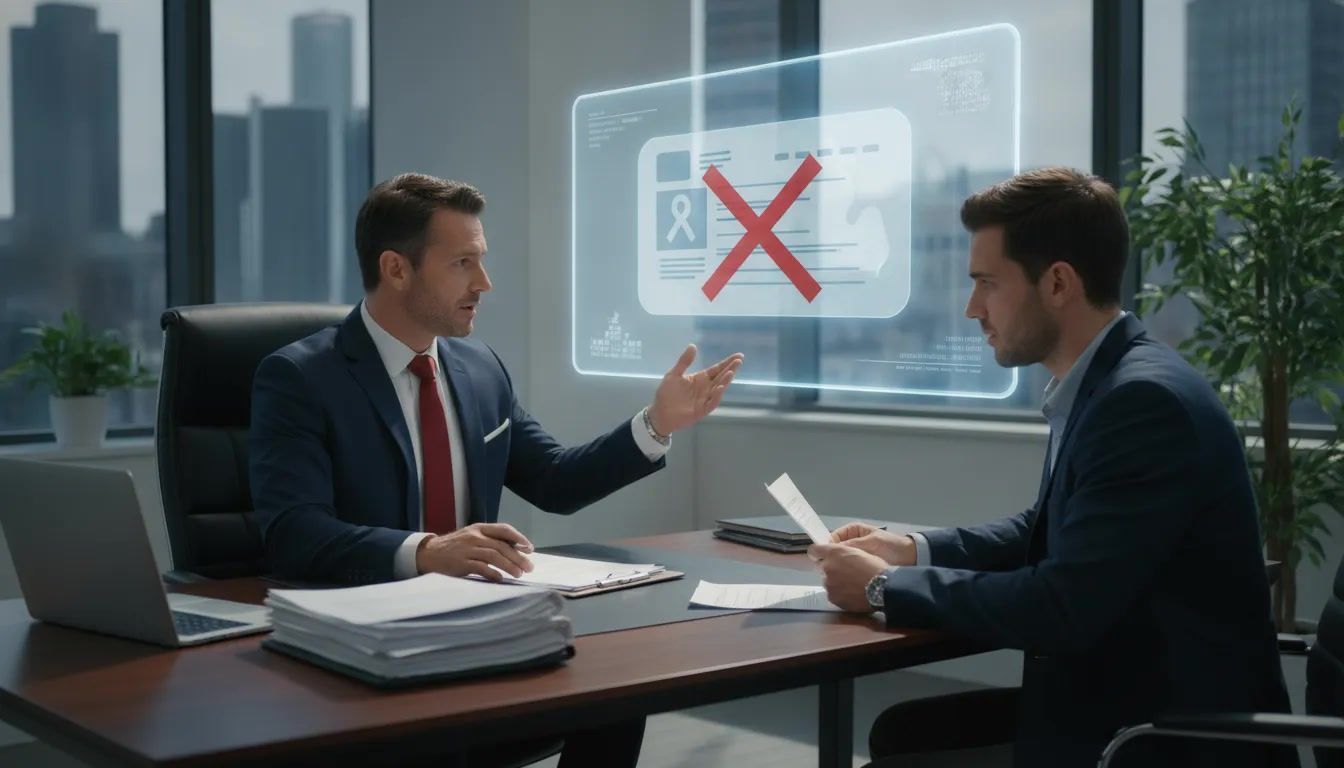
The Michigan DUI charging process runs from the stop to a citation, complaint, or warrant and the first court date. A charge is not a conviction.
An OWI arrest in Michigan is the start of a file, not the end of a case. After a stop or a crash, the Michigan DUI charging process can move through an officer's report and a chemical test. It can also produce a charging paper: a citation, a sworn complaint, a warrant, or a summons. The first court date is where that charge is addressed. Which path you are on depends on the document in your hand, not on a single statewide timeline.
Request a free initial consultation about the paper you were given. A free consultation is not free representation, and it is not a promise about the result.
It helps to keep the criminal case separate from any license action. A test refusal can start a suspension even while the court file is still being written. Those are different proceedings, with different notices. Knowing which envelope you opened is the first practical step.
What the Michigan DUI Charging Process Covers
Michigan law uses the term operating while intoxicated, or OWI. People still say DUI. This article uses both words for the same early path, from the stop or crash through the charging decision to the first court date. The path is not the whole case. A charge is not a conviction. An arrest is not, by itself, proof of either.
There is no single clock that says when every OWI charge must be filed. Some misdemeanor cases begin with a citation written at the arrest. Others begin later, when a sworn complaint is presented and a magistrate issues a warrant or a summons. An appearance ticket, or other documentation the court or prosecutor requests, is supposed to be forwarded for review without delay. "Without delay" is not a number of days you can circle on a calendar.
- Stop or crash: The investigation may end in an arrest, a citation, or more review.
- Charging paper: The case may proceed on a citation, or later on a complaint with a warrant or summons.
- First court date: You are brought before the court named on the paper. That date starts the next stage. It does not decide the case.
Many misdemeanor OWI cases are heard in a district court. Wayne County has several. The 19th District Court in Dearborn is one local example, not the court for every arrest in the county. A felony OWI charge can move to circuit court. Monroe County uses its own courts. Boulahanis & Associates keeps its office in Dearborn and handles DUI defense in Wayne County and nearby communities, including Monroe County. The court printed on your paper controls where you are expected to appear. The office address is not a courthouse, and a service-area page is not a second office.
The sections below stay on that early path. They do not list fines or jail ranges, and they do not explain how to prepare for a later hearing. Those questions depend on the charge and the history in your file. If you already have a citation, summons, or warrant, have a Michigan lawyer read it before you treat a general timeline as your deadline.
From the Stop to the Arrest
Most people meet this process on the shoulder of a road or after a crash. An officer may ask where you were headed, whether you had anything to drink, and whether you will do field tests. You may be asked for a license, registration, and proof of insurance. The conversation can feel informal. It is still part of the investigation that can support an arrest.
Michigan law names two situations in which a peace officer may arrest without a warrant for a suspected OWI. The Michigan courts' traffic benchbook summarizes MCL 257.625a(1).
One is a crash in this state. The officer needs reasonable cause to believe the person was the operator and was violating the OWI statute or a matching local ordinance. The other is a stopped vehicle on a highway or street, with any part of the vehicle in the roadway. The person is in the driver's seat, and the officer has that same reasonable cause.
Those are arrest rules. They are not a checklist for predicting your own stop.
Chemical testing often comes next, usually at the station. A breath or blood result can be one input a prosecutor later reads. It is not the whole file. The Michigan State Police explains the charging levels. A driver age 21 or older can be charged at a bodily alcohol content of 0.08 or more. A driver under 21 can be charged at 0.02 or more. A result of 0.17 or more is a high-BAC case with enhanced penalties.
The same page says a driver can be arrested for impairment at a lower level. Those figures are charging levels. They do not script what an officer must say. They also do not say whether a test in your case was done correctly.
Release from the station does not tell you the charging path. A citation may begin a misdemeanor case that night. A complaint, followed by a warrant or a summons, may begin a case later. A bond, a ride home, or a phone call does not answer which path you are on. The paper is the better clue.
A test refusal is a separate question from the arrest. Refusing can start a license suspension. It does not erase the criminal investigation, and submitting to a test does not guarantee that no charge will be written. The firm's note on what to do right after a stop covers those first hours. It is not a prediction of the charging decision.
Citation, Complaint, or Warrant
The Michigan DUI charging process can start on different papers. The document you receive changes what you do next. A citation may open a misdemeanor case at the arrest. A complaint followed by a warrant or summons may open a case days later. There is no one statewide filing day that covers both.
| Paper | What it is | Who usually starts it | What to look for |
|---|---|---|---|
| Appearance ticket or citation | A written notice of the alleged offense that tells you to come to court. | Often a peace officer, in a misdemeanor matter. | The court, the date and time, and the exact charge name. |
| Sworn complaint | A sworn statement of the alleged offense that asks the court to act. | Usually the prosecutor or another authorized complainant. | The court, the charge, and any date that is already set. |
| Warrant or summons | A court paper that authorizes an arrest or orders you to appear. | A magistrate, after a sworn complaint and reasonable cause. | Whether it is a warrant or a summons, plus the court, charge, and date. |
For many misdemeanors, an officer may issue an appearance ticket instead of filing a complaint. OWI is treated differently.
MCL 764.9c excludes an operating while intoxicated offense from the rule that requires a ticket and release for many misdemeanors with a maximum of one year or less. The same statute does not give an arrested person a right to a ticket instead of an arrest. A citation, or a night in custody, does not forecast the outcome.
If a ticket is issued, the ticket or other requested documentation must go to the court, the prosecuting authority, or both, for review without delay.
On the complaint path, MCL 764.1a says a magistrate issues a warrant or a summons on a proper sworn complaint and a finding of reasonable cause. In many cases the court must issue a summons rather than a warrant. A prosecutor can still request a warrant. A warrant can also issue when the complaint involves public safety, a risk of nonappearance, or certain assaultive or domestic-violence allegations.
Keep every page, including the back of a citation. Confirm the court, the date, and the charge name before you assume you know what the paper requires. A lawyer who handles Michigan OWI cases can match that document to the deadline that actually applies.
What the Prosecutor Reviews Before a Charge
Someone still has to decide whether a case will be authorized and which offense will be written down. In many files that decision sits with the prosecuting attorney for the county where the driving happened. Wayne County and Monroe County each have their own office. The assigned lawyer can change from file to file, so this article does not name one.
Forwarding a ticket for review without delay is a duty about moving paperwork. It is not a promise that a charge will be authorized on a set day. A quiet week is not proof the case was dropped. A citation may already be the charge. A sworn complaint may still be on a desk, waiting for a magistrate to find reasonable cause and issue a warrant or a summons. A prosecutor may ask for a warrant instead of a summons.
What the reviewer reads depends on the file. A short report may cover the reason for the stop and what the officer says was observed. It may note whether field tests were requested and whether a chemical test was taken. A crash report, witness names, or a prior record can be in the same stack. None of that material is a conviction. It is the information used to choose a charge, or to decide the facts do not support one.
People often want a number of days until filing. There isn't one number that fits every arrest. Read the document you have. Note the court, the date, and the offense. Then ask a lawyer how that paper fits the local process. Authorizing a charge is not a finding of guilt. Waiting is not a dismissal.
For a stop in Wayne County outside Detroit, or in Monroe County, that local review is one early gate. It is separate from what later happens in the courtroom. The firm discusses the early paper trail as part of drunk driving defense, without treating review as a forecast.
The First Court Date After a Charge
The next court event is often an arraignment. It is the first time the charge is addressed in front of a judge. It is not a trial, and it is not the place this article tries to script. What you need from this stage is the timing rule and a short list of what the notice should say.
For listed misdemeanor OWI violations, MCL 257.625b says the person must be arraigned on the citation, complaint, or warrant not more than 14 days after the arrest. If a warrant is issued or reissued, the 14 days run from service of that warrant, whichever is later. The statute also says the court shall not dismiss the case, or impose another sanction, only because that time limit was missed.
The 14-day limit does not apply to listed violations punishable as a felony, or to a violation joined with a felony. A lawyer should confirm that your charge is in the misdemeanor group before you count days.
The same statute tells the court to schedule a pretrial conference with the prosecutor, the defendant, and the defendant's attorney. For those misdemeanor cases, the conference is to be held not more than 35 days after the arrest or warrant service.
The period is 42 days if the court has only one judge who sits in more than one location. The court orders the defendant to attend and may accept a plea at the end of the conference. One adjournment, for good cause, may be granted to a party, and it may not exceed 14 days.
Missing the scheduling limit does not, by itself, require dismissal. The 35-day and 42-day limits have the same felony exception as the arraignment rule.
Before the court accepts a plea, the accused must be told the maximum possible jail term and the maximum possible fine. This article does not list those maximums. They depend on the charge and the record, and they belong in a review of your paper, not in a general chart.
On the notice, check these items in order:
- The court name, not just the county.
- The date and time, including whether the date has already passed.
- The charge as it is written, including any ordinance number.
- Whether you must appear with a lawyer, and any bond note on the form.
The 19th District Court in Dearborn is one example of a court that can appear on a Dearborn case. It is not the court for every Wayne County arrest. More background sits with these common Michigan DUI questions. Deadlines in this section need attorney review, because courts apply them to the charge, the county, and the history of the file. Missing your own date can create a separate problem even when a statutory target does not erase the case.
What to Read on the Charging Paper
The most useful page in the early process is the one you already have. Read it before you try to map every Michigan court. Look for the court, the date and time, the offense name, and any bond or release condition. Those lines tell you more about your file than a general description of OWI procedure.
The court name matters because Wayne County has more than one district court. A Dearborn case may list the 19th District Court. A stop in another Wayne County community, or in Monroe County, can list a different court. The firm's only published office is 21905 Garrison St, Dearborn. That address is a law office. If the paper names a court you do not recognize, write the name down. Do not assume the hearing is in Dearborn because the lawyer is.
The offense name matters because the case is filed as operating while intoxicated, often shortened to OWI. A local ordinance may use different words that still correspond to the state statute. The name on the paper is the allegation. A high-BAC note, a drug allegation, or a prior-record note can change what is at stake. This article leaves fines and jail ranges out on purpose. Those numbers turn on the specific charge, and stating them here would look more certain than they are.
The date matters even when the mailing feels late. For many misdemeanor cases, the arraignment target is measured from the arrest or from warrant service. A missed statutory target does not, by itself, end the case. A missed appearance date is a different problem. If you cannot tell whether the paper is a citation, a summons, or a warrant, get that question answered before you guess.
Bond language is easy to skip. A release condition can limit driving, require a check-in, or set an amount to address before the next date. Those conditions belong to the criminal case. They are not the same as a Secretary of State license action. Keep both sets of papers.
If you want a plain list of communities tied to the Dearborn office, start with the areas served from Dearborn. Then match that list to the court on your notice. General pages, including legal resources, are not a substitute for the notice itself.
The Criminal Case and the License Track
An OWI arrest can open two tracks. The criminal case is the alleged offense. It moves through a prosecutor and a court. The license track is about driving privileges. It can involve the Secretary of State and, in a refusal case, a separate hearing. The same person can be dealing with both in the same week. Hiring a lawyer for one track does not automatically include the other.
A breath-test refusal shows the split clearly. The Michigan State Police describes a one-year license suspension for a first refusal and a two-year suspension for a second refusal within seven years. That suspension is a license action. It is not the sentence in the criminal case, and it is not proof the charge has been decided. This article does not explain how to request an implied-consent hearing. Any deadline on that hearing needs a review of your own notice.
Either track can move while the other is quiet. You can have an arraignment date while a license letter is still in the mail. A license action can proceed before you have stood in front of a judge on the OWI. Waiting for one file to finish does not pause the other. A court notice and a Secretary of State notice answer different questions, so read both.
The firm handles OWI and DUI defense, and it handles implied-consent violation matters as separate work. It does not handle license restoration. Older web copy that mentions restoration is not the current practice. Hardship-license questions in circuit court are also outside the charging path described here. They should be checked against your paperwork before anyone gives detailed guidance.
Gregory J. Boulahanis can sort which track a document belongs to. The conversation is a review of the papers you bring. It is not a forecast of the criminal case or the license action.
Request a free initial consultation before the first court date. A free consultation is not free representation.
Frequently Asked Questions
Is an arrest the same as a Michigan DUI charge?
No. An arrest is the decision to take you into custody or to start the paperwork. A charge is the offense written on a citation, complaint, warrant, or summons. Some misdemeanor cases begin with a citation at the arrest. Others begin later, after a sworn complaint and a finding of reasonable cause. The paper, not the ride to the station, tells you a court case has started.
How long after a Michigan OWI arrest will I be charged?
There is no single statewide number of days. A citation can start the case immediately. A complaint and a warrant or summons can come later. For many misdemeanor OWI cases, state law sets a 14-day arraignment target after the arrest or warrant service. The court does not dismiss a case only because that target was missed. Felony charges follow different timing. Have a lawyer read your paper before you rely on a deadline.
What is the difference between a citation, a complaint, and a warrant?
A citation or appearance ticket is often written by an officer and tells you to come to court. A complaint is a sworn statement of the alleged offense. A magistrate may then issue a summons, which orders you to appear, or a warrant, which authorizes an arrest. OWI is excluded from the rule that requires a ticket and release for many lower misdemeanors, so an arrest instead of a ticket is possible. None of these papers is a conviction.
Does a breath-test refusal stop the criminal case?
No. A refusal can start a separate license suspension. State police guidance describes one year for a first refusal and two years for a second refusal within seven years. That license track is not the criminal charge. The court case can move while the license matter is pending. This firm treats criminal defense and implied-consent matters as separate work, and it does not handle license restoration.
Which court hears a Wayne County or Monroe County OWI case?
Read the paper. Many misdemeanor OWI cases stay in a district court. The 19th District Court in Dearborn is one local example, not the court for every Wayne County arrest. A felony charge can move to circuit court. Monroe County uses its own courts. The court name, the date, and the charge on your notice control where you are expected to appear.
Talk With a Dearborn OWI Lawyer
You may already have a citation, complaint, warrant, or court date from Wayne County or Monroe County. Read that paper with someone who handles these cases. The firm is in Dearborn and focuses this work on OWI and DUI defense. The way to request a free initial consultation is by phone. The call is a conversation about the charge and the next date. It is not free representation, and it is not a promise about how the case ends. There is no online booking calendar.
Request a free initial consultation about the charging paper and the first court date. A free consultation is not free representation.