Compare appointed and retained counsel in a Michigan DUI case. Learn what to ask about applications, fees, case scope, court dates, and preparation.
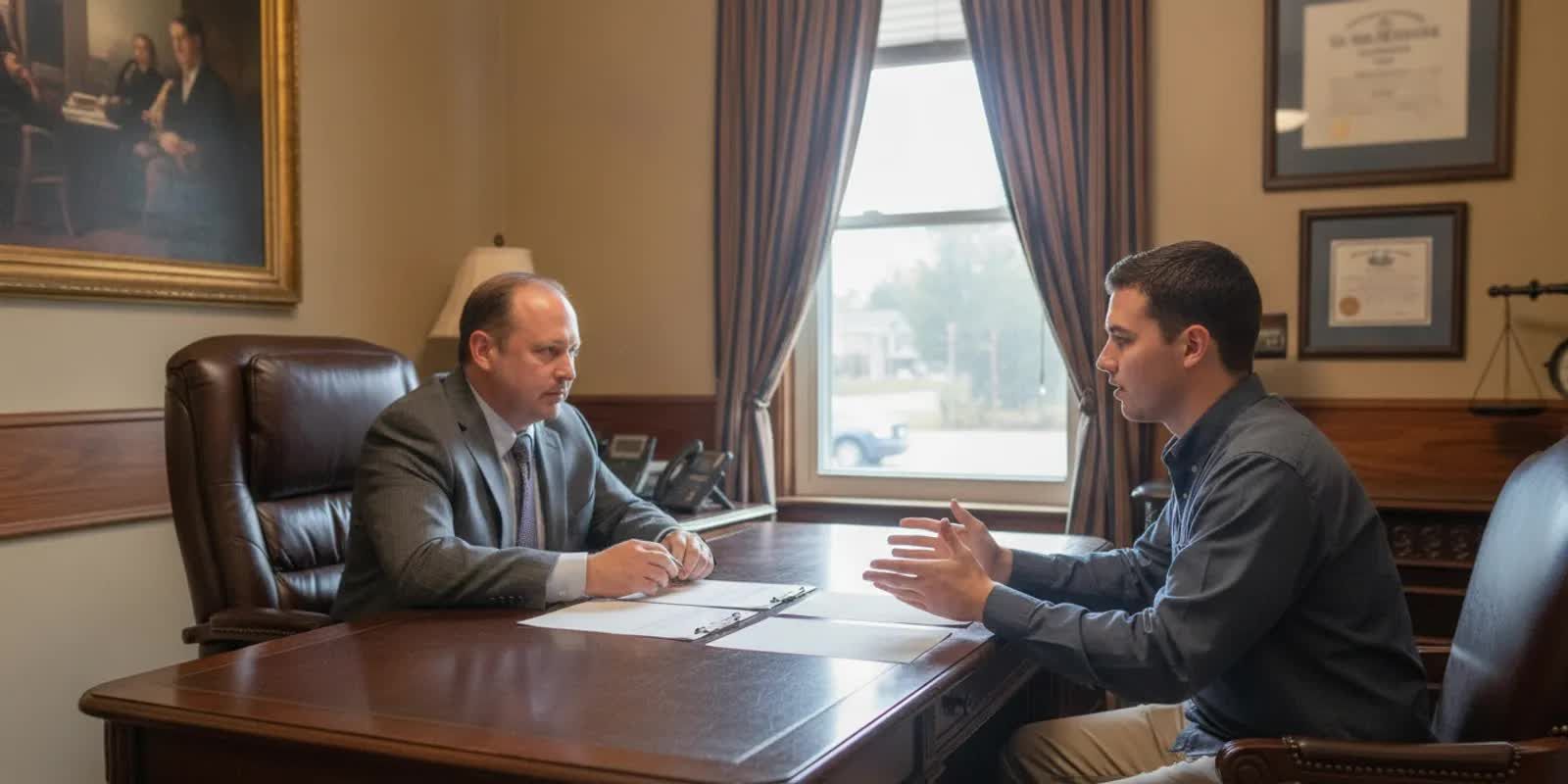
If you are looking for a DUI court appointed lawyer Michigan residents may request, begin by asking how the court handling the case determines eligibility and what representation may cover. A DUI or OWI charge alone does not establish qualification. Rules and procedures can change, so verify current requirements with the court or a Michigan attorney.
Call now for a free consultation
What does court-appointed counsel mean?
Court-appointed counsel is assigned through a court process when applicable requirements are met. The important point is that the court process—not an online article, a charge label, or a lawyer contacted for a consultation—determines whether an appointment is available in a particular case. Ask the court what application steps currently apply, what information it needs, and how it will communicate a decision.
An appointment describes how counsel is obtained. It does not decide what happened, determine the strength of the evidence, or predict a case result. If counsel is appointed, ask what work is included, how to communicate with counsel, and whether related proceedings are part of the appointment. The answers may depend on the specific appointment and matter.
Do not assume a pending request changes a court date. Read each notice and ask the court or a lawyer what to do if a scheduled appearance arrives before a decision. Keep a record of the office you contacted, the date, and any instructions you received. The State of Michigan website is an official starting point for state information, but it does not decide an individual application or replace current case-specific instructions.
How is retained counsel different?
Retained counsel is hired directly under an agreement between lawyer and client. Before entering an agreement, ask what services are included, how fees are determined, whether expenses may be separate, how additional work is handled, and what happens if the scope changes. Read the written engagement carefully. A consultation is not necessarily an agreement for representation, so ask what the conversation does and does not establish.
Boulahanis & Associates advertises a free initial consultation. A free initial conversation does not mean that legal representation is free. Public representation fees are not established here; ask directly about proposed scope and terms. Do not rely on another firm’s price or assume that a particular payment arrangement is offered.
Does everyone charged with DUI qualify?
No general article can determine whether a specific person qualifies. Ask the court handling the case what application process applies, what documents or financial information it currently requests, how and when a decision is communicated, and whether any contribution or repayment issue needs clarification. Keep copies of forms and documents you submit, plus notes about when and how you submitted them.
If something is missing, ask how to provide it and whether the court has issued specific instructions. If you have a scheduled appearance, ask specifically how the pending request relates to that date. Do not assume that the date has moved unless the court confirms it. If cost is a concern, clarify the court’s process and any private consultation terms separately rather than making a choice based on a guess.
A simple application-preparation sequence
- Identify the case and court. Use the court name, case number, and dates printed on the documents you received. If papers appear inconsistent, ask the court which information to use rather than inferring a venue.
- Ask for the current procedure. Confirm where to obtain the right form, how it should be returned, what supporting information is requested, and whether the court has instructions about an upcoming appearance.
- Make a complete copy. Keep copies of the application, supporting papers, and any confirmation of delivery. Record the date and method of submission.
- Track the response. Ask how a decision will arrive and what to do if you have not heard back before a court date. Do not treat silence as approval or denial.
- Clarify the next responsibility. Once you receive an answer, ask who handles scheduling questions, whether counsel has been assigned, and what you should do next.
This is an organization checklist, not a statement of current Michigan eligibility criteria. The court can explain its process; a Michigan attorney can address how the rules and a particular notice apply to an individual case.
How do appointed and retained counsel compare?
The differences below are general. Specific appointment procedures and private engagement terms can vary. Use the questions column as a prompt to verify details rather than as a promise about what either path includes.
| Question | Court-appointed counsel | Retained counsel |
|---|---|---|
| How does it begin? | Through the court process, if an appointment is made. | Through a direct discussion and an agreed engagement. |
| Who decides whether the path is available? | The applicable court process determines whether counsel is appointed. | The client and lawyer discuss whether to enter an engagement. |
| What should I ask about cost? | Ask the court about current requirements and any possible financial obligation. | Ask the lawyer about fees, expenses, scope, and payment terms in writing. |
| What work is included? | Confirm the scope of the appointment and ask how related matters are treated. | Read the engagement and identify exclusions or work requiring a separate agreement. |
| What if a court date is near? | Ask the court or counsel what to do about every scheduled date while a request is pending. | Confirm whether representation has begun and who will address the date. |
| How are communications handled? | Ask how to reach assigned counsel and how updates will be shared. | Ask who your contact is and how documents and updates should be sent. |
What should you ask before choosing a path?
Prepare questions before contacting the court or a lawyer. If a term is unfamiliar, ask for a plain explanation and write down the answer. Separate questions about court procedure from questions about a private engagement.
- How do I request appointed counsel in this court?
- What forms or financial documents are currently required?
- How will I learn whether counsel has been assigned?
- Is there any contribution or repayment issue I should clarify?
- What should I do if a scheduled appearance arrives before a decision?
- What work is included, and what is outside the representation?
- Are implied-consent or other license matters separate from the criminal case?
- For private counsel, what services and expenses appear in the written agreement?
- Who should I contact about dates, documents, and case updates?
A first conversation can help identify issues that need further review. It should not be treated as a promise about what a court or licensing authority will do.
What information can help a lawyer understand the case?
Gather documents you already have, but do not delay responding to a notice just to create a perfect packet. Keep originals safe and make copies for your records. A short, organized set of papers can make an initial discussion more focused without requiring you to draw legal conclusions.
Organize papers by proceeding
Collect citations, charging papers, bond or release conditions, court notices, and written appearance instructions. Make a simple list of each date, time, location, and the document that states it. If separate driving-privilege paperwork exists, place it in a separate folder. Do not assume it is part of the criminal case merely because it relates to the same incident.
Read each notice on its own terms. Do not infer a deadline from another document or a general online explanation. Ask a lawyer to review the actual notice and current rules when a deadline or response may be involved. If you speak with a court clerk, distinguish requests for procedural information from legal advice about what a notice means.
Write a useful timeline
Note when and where events occurred, when paperwork arrived, who you contacted, and what dates were given. Mark approximate times as approximate. Separate your own recollection from what another person said or what a document states. If you do not know a detail, leave it uncertain rather than filling in a guess.
The timeline is for organizing a conversation, not arguing the case. Describe what you recall seeing, hearing, or being asked. Avoid labeling conduct or test results as unlawful or invalid; counsel can assess their significance after reviewing the context and available materials. Include questions that you want answered, such as whether a report or recording exists, without claiming what it will show.
Preserve records and limit unnecessary sharing
Keep relevant messages, photographs, receipts, and records in their original form. If video or electronic information may exist, tell counsel and ask how to preserve it. Do not edit or delete potential evidence. Avoid posting detailed accounts publicly; ask counsel how to handle questions from others. Keep a record of where you stored original files so you can find them again.
Make a separate list of practical concerns, such as work, transportation, caregiving, travel, or driving privileges. These concerns can guide questions but do not establish a legal outcome. Follow instructions that apply, and ask a qualified professional to explain a notice you do not understand.
How is a DUI charge different from a license issue?
A criminal DUI or OWI matter and a driving-privilege issue may involve different paperwork, decision-makers, and procedures. The fact that they arise from one incident does not make them one case or mean that representation in one automatically includes the other. Identify what each paper concerns before relying on advice about it.
A person may have criminal-court papers and a separate notice about an implied-consent issue. That does not establish that a hearing is available or that a particular deadline applies. Ask which proceeding each document concerns, what instructions govern it, and whether separate representation or a request is needed. Avoid relying on generalized deadline claims.
Boulahanis & Associates identifies OWI/DUI defense, implied-consent violation matters, and hardship-license matters in circuit court among its current priorities. These are distinct forms of work; confirm availability and scope directly. The firm no longer handles license-restoration cases. When speaking with appointed counsel, ask whether a separate administrative or licensing issue falls within the appointment. When speaking with retained counsel, check the engagement for the same distinction.
How can you assess communication and fit?
Ask how to send documents, whom to contact about routine questions, and how you will receive information about dates or requests. Do not assume a response time unless it is confirmed. Update contact information with counsel and the court as appropriate. Ask whether a preferred way of sharing papers is available; do not send sensitive material through an unconfirmed channel.
You may ask how the lawyer reviews police reports, available video, and chemical or field-sobriety testing. Relevance depends on facts and available materials. The first conversation may identify questions to investigate without resolving every evidence issue. You can ask what information would be helpful next and whether there are matters that need prompt attention.
Read the firm’s DUI defense practice page and its approach to representation. The attorney information page identifies Gregory J. Boulahanis. Its service-area page lists communities but does not guarantee that a particular case can be accepted. These pages can explain the firm’s published description; confirm the details of any specific representation directly.
What assumptions should you avoid?
- A serious charge guarantees appointed counsel. Ask the court about the current process; the charge alone does not establish eligibility.
- A pending request means you can miss court. Confirm what to do about every scheduled appearance.
- A consultation means representation has started. Confirm whether an engagement exists and what it covers.
- One lawyer automatically handles every related issue. Clarify criminal, implied-consent, and license scope.
- A free consultation means free legal work. Ask about representation terms separately.
- A lawyer can promise what a court will do. Decisions depend on case facts and actions by others.
How might the first conversation work in practice?
Imagine a person receives a citation and court notice but is unsure whether private counsel is affordable. Instead of guessing about eligibility based on the charge, the person identifies the court and appearance date, asks that court how to request appointed counsel, and learns which documents are currently needed. The person also asks what to do if the date arrives before a decision. These steps resolve process questions without assuming an outcome.
The person gathers the papers and makes a brief list of questions. If speaking with private counsel, the person asks whether the conversation is only a consultation or an offer of representation, what the proposed agreement covers, and how fees and separate matters are addressed. Asking about private counsel does not itself change a court date or determine an application.
Now consider someone who receives a separate driving-privilege notice in addition to criminal-court papers. The person labels the documents by proceeding and records each date from the notice that states it. Rather than assuming that the same lawyer or appointment covers both, the person asks who handles each issue and whether separate representation is needed. That distinction can prevent an important question from being lost in a general discussion of the DUI charge.
A third example is a person who has limited documents at the first call. The person can still explain which notices are available, identify any scheduled date, and say what is missing. Counsel may ask for additional materials later. The practical objective is to make the immediate question clear, not to reconstruct every event perfectly or decide what the evidence proves before legal review.
These examples illustrate organization, not legal advice or a prediction. If an instruction differs from this general explanation, ask the court or a lawyer how it applies to the papers in hand.
What can make the process confusing?
Different offices answer different questions
A court can explain its administrative process, forms, and how to submit a request, but staff may not be able to advise you on the legal strategy for your case. A lawyer can review case-specific questions, but a private consultation does not itself change the court’s records or deadlines. When you call, state what kind of answer you need: procedural instructions, legal review, or information about a private engagement.
For example, “Where do I submit this form?” is a process question. “What does this language mean for my case?” may call for legal review. “Does this consultation include representation?” is an engagement question. Framing the question clearly makes it easier to direct it to the right person and reduces the chance that a general answer is mistaken for a legal decision.
Several dates can appear in one packet
A citation, court notice, release condition, and separate license notice may refer to different events or responsibilities. Do not combine dates into one assumed deadline. Create a list with four columns: document name, date or deadline printed, who issued it, and the question you need answered. If two papers appear to conflict, keep both and ask someone qualified to explain the discrepancy.
For instance, a person might see a criminal court appearance date and a separate response instruction on another notice. The safe organizational step is to record each separately and ask promptly what applies to each paper. Do not infer that satisfying one notice resolves the other, or that an appointment request pauses either process.
Some questions cannot be answered from a short first call
A lawyer may need the actual charging papers, reports, recordings, or testing records before discussing their significance. Do not expect a quick intake conversation to establish whether evidence is admissible, whether a charge can be changed, or what a result will be. Instead, ask what materials should be reviewed and how to provide them securely if representation or a further consultation is agreed.
Useful preparation makes the conversation efficient: identify the court, state the next date, name the documents you have, and list the uncertainties. If you cannot answer a question, say so. Accurate uncertainty is more useful than a confident guess that later needs to be corrected.
How should you compare the practical next steps?
There may be more than one question to handle at once. The table below sorts common tasks by purpose. It is not a timetable or a statement that every person must take the same steps.
| Situation | Useful next action | What to verify |
|---|---|---|
| You want to ask for appointed counsel | Contact the court handling the case and ask for current application instructions. | Forms, supporting information, submission method, and how the decision is communicated. |
| A court appearance is approaching | Read the notice and contact the court or a lawyer promptly. | What to do about the specific date; do not assume a request changes it. |
| You are considering private representation | Request a consultation and ask about the proposed engagement. | Scope, fees, expenses, exclusions, and whether representation has begun. |
| You have separate licensing paperwork | Keep it separate and ask which proceeding it concerns. | Whether it requires different steps or separate representation. |
| You lack some documents | Explain what you have and what is missing. | Whether the missing item is needed now and how to obtain or submit it. |
| You are unsure who to call | Label the question as procedural, legal, or engagement-related. | Whether the court, assigned counsel, or a private lawyer can address it. |
For a broader look at the firm’s work, visit its home page. If your case is in a listed nearby community, the Dearborn information and other service-area pages describe the firm’s published reach; they are not proof of a separate office or acceptance of a specific case.
Frequently asked questions
Can I choose who the court appoints?
Do not assume that you can select appointed counsel or that an appointment request will be granted. Ask the court how assignment works and how you will receive its decision.
Should I attend court while waiting?
Do not treat a pending request as changing a scheduled appearance. Check the notice and ask the court or a lawyer what to do about the date.
Can I talk to private counsel while requesting appointed counsel?
You can ask the court about its procedure and separately ask a lawyer about a consultation or engagement. Do not assume either conversation changes a court date or determines eligibility.
Does a DUI lawyer also handle implied-consent or license matters?
Not necessarily. These proceedings can be distinct. Ask whether each issue is within an appointment or written engagement and confirm availability.
What should I bring to a consultation?
Bring charging and court papers, any separate notices, a brief timeline, and your questions. Keep originals safe and mention any approaching date.
What is a practical next step?
Put court papers and separate notices in order, note each date, and write down questions. Contact the court handling the case for current appointed-counsel instructions, especially if an appearance is approaching. If considering private representation, ask about scope, fees, expenses, and whether a consultation is separate from an engagement. For a first discussion with Boulahanis & Associates, call (313) 277-2550 and ask about a free initial consultation; that conversation is not free representation.
Call Boulahanis & Associates to discuss a free initial consultation
Knowing who represents you, which matters are included, and what steps remain can help you approach a Michigan DUI case with clearer information.