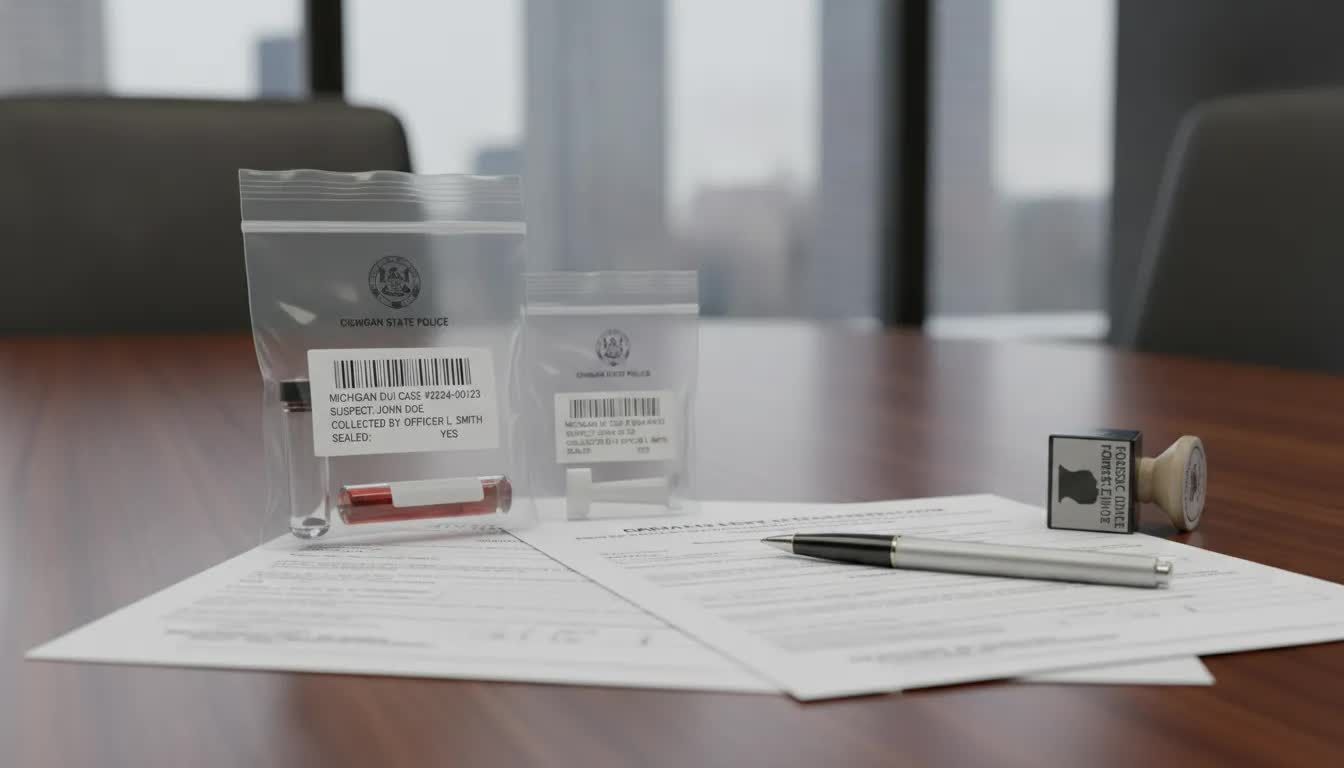
Get clear answers on DUI blood test accuracy and common testing errors, plus practical tips for reviewing lab results and protecting your legal rights.
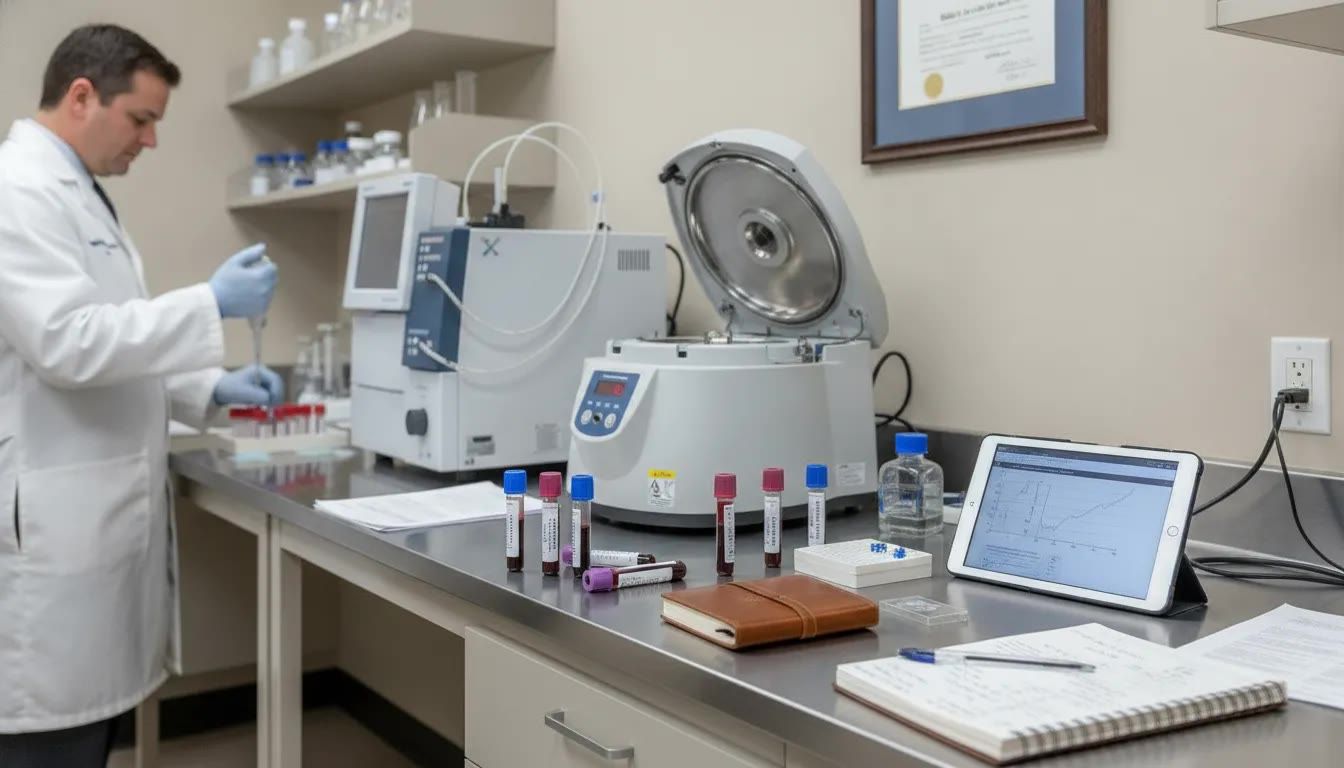
After an OWI arrest, a blood-test result can feel overwhelming, especially when you do not know how the lab reached its conclusion. The process involves several steps, from drawing and labeling the sample to transporting, storing, and analyzing it. A weakness in the records or a question about the testing method may deserve attention, though it does not automatically mean the result is wrong. This guide explains DUI blood test accuracy and common testing errors in plain language, including why sample handling and test timing matter. If your case is in Wayne County or the Dearborn area, understanding these details can help you ask informed questions about the evidence and your driving privileges.
Key Takeaways
What Is a DUI Blood Test, and How Do Labs Measure BAC?
A DUI blood test measures alcohol in a blood sample and reports the result as blood alcohol concentration, or BAC. In a Michigan OWI case, that result may be important evidence. But the number alone does not explain how the sample was collected, whether the lab tested whole blood or another blood component, or what a person’s BAC was while driving.
Those details can affect how a result should be interpreted. A sample may pass through several hands before it reaches a lab, and the collection, storage, and testing records can help show whether proper procedures were followed. Timing matters, too. BAC can change as the body absorbs and eliminates alcohol, so the test result may not precisely match the level at the time of a traffic stop.
A blood test directly measures alcohol in a sample, but that does not make every result automatically accurate or conclusive. In a Wayne County OWI case, an attorney can review the blood-test evidence alongside the timeline, police reports, and other facts. Boulahanis & Associates represents people facing DUI and OWI charges in Wayne County and the Dearborn area, and offers a free initial consultation.
How labs collect, test, and report blood samples
A blood test usually involves drawing a sample, placing it in a tube, labeling and sealing it, and sending it to a laboratory. Lab staff then use an analytical method to measure alcohol and report a result. Records should help identify the sample and document how it was handled, stored, and tested.
Small details in that process can matter. For example, an alcohol-based skin antiseptic, an unsealed tube, incorrect labeling, or incomplete handling records may raise questions about contamination, a sample mix-up, or whether the sample remained secure. These issues do not automatically invalidate a result, but they may warrant closer review.
How whole blood, serum, and plasma affect results
Whole blood contains both blood cells and the liquid portion of blood. Serum and plasma are liquid components separated from the cells, and they are not identical to whole blood. Because alcohol levels can differ between these components, a result from serum or plasma may not be directly comparable to a whole-blood result.
This distinction can arise when medical test results are considered in a forensic case. In some contexts, serum-based results have been found to be at least 11% higher than the corresponding whole-blood alcohol level. That figure is not a universal adjustment for every test. The sample type, the lab’s method, and the records should all be considered before interpreting a reported BAC.
What a BAC result shows—and doesn’t show
A BAC result shows the alcohol concentration measured in the sample the lab tested. By itself, it does not describe how a person looked or behaved while driving, nor does it establish the precise BAC at an earlier time. The result should be considered with the testing records and other evidence, not treated as automatically error-free.
The gap between driving and the blood draw can be especially important. If the body was still absorbing alcohol, BAC may have continued to rise after the person stopped driving. If the body was eliminating alcohol, the level may have been falling. A later test, therefore, may not precisely represent the level at the time of driving.
Why testing time matters
The time between driving and a blood draw can affect how closely the result reflects BAC at the time of driving. Alcohol does not enter the bloodstream all at once. During absorption, BAC may still be rising; during elimination, it generally declines. A test taken later provides a measurement of the sample at that point, not a direct reading of the person’s earlier BAC.
The relationship can also vary depending on where alcohol is in the absorption or elimination process. That does not establish what a person’s BAC was in a specific case, but it shows why the timeline deserves careful attention. Comparing the time of driving, the stop, the arrest, and the blood draw with the lab records may help put the result in context.
How Accurate Are DUI Blood Tests?
A DUI blood test can provide important evidence, but its reported result is not automatically error-free or a complete account of a person’s condition while driving. Accuracy depends on several steps: collecting the sample properly, preserving and identifying it, using a suitable testing method, and documenting the lab’s work. Problems at any stage may raise questions about how much confidence to place in the result.
Blood testing measures alcohol in a sample directly, unlike a breath test, which estimates blood alcohol from a breath sample. But direct measurement does not make a blood test immune to error.
A reported blood alcohol concentration (BAC) also reflects the sample at the time it was tested, not necessarily the person’s BAC while driving. In a Michigan OWI case, the timing of the test, the lab’s records, and other evidence all matter. A careful review focuses on the specific facts, rather than treating a single number as the whole story.
How gas chromatography differs from enzymatic assays
Gas chromatography is a common method for measuring alcohol in blood. The sample moves through a column, where its substances separate. A detector measures the separated compounds, and the lab uses that information to report an alcohol concentration.
Enzymatic assays use a different process. They rely on a chemical reaction involving enzymes and a substance called NADH. The reaction is used to estimate the amount of alcohol in the sample.
The method alone does not establish whether a result is reliable. A reviewer may examine whether the lab used the method appropriately, followed its procedures, and documented the analysis. The sample’s condition and handling history also matter.
How labs validate methods and control quality
Labs use validation and quality-control procedures to check that a testing method is suitable and that equipment is functioning as expected. Those procedures may include instrument calibration, control samples, and records showing how the analysis was performed. Missing or incomplete documentation can make it harder to assess whether a reported BAC is dependable.
Potential issues include faulty calibration, contamination from an earlier sample, or a method that was not properly validated for forensic use. Accreditation and quality-control records may also help show whether the lab followed its stated standards. An overview of blood-test challenges explains why these details can matter.
A possible flaw does not automatically invalidate a result. The important question is whether the issue could have affected the analysis, based on the lab’s records and the facts of the case.
How uncertainty and repeat tests affect results
Every measurement has some degree of uncertainty. That does not mean a test result is wrong, but the reported number should be considered alongside the method, the sample condition, and the records supporting the analysis. A repeat test may help identify a difference between results, but it cannot necessarily resolve questions about how the sample was collected or stored before testing.
Sample handling is one area a reviewer may examine. Mislabeling, mishandling, or improper storage can raise questions about whether a sample remained suitable for analysis.
A meaningful review compares collection records, storage information, lab notes, and any available repeat-test results. Whether a difference affects the case depends on the circumstances and the quality of the documentation.
Why BAC alone doesn’t prove impairment while driving
A blood test taken after a stop measures the alcohol concentration in the sample when it was tested. It may not show the person’s BAC at the time they were driving. If alcohol was still being absorbed, BAC may have been rising; if the body was eliminating alcohol, it may have been falling. The time between driving and collection can therefore matter when interpreting the result.
Other factors, including metabolism, food intake, dehydration, medications, and medical conditions such as diabetes or GERD, may be relevant to how a result relates to a person’s condition. They do not automatically disprove a test result, and their significance depends on the individual circumstances. A discussion of evidence that may affect blood alcohol test results outlines some of these considerations.
In a Michigan OWI case, BAC is one piece of evidence. Its meaning should be assessed alongside the test timing, lab records, and other evidence about the driving and stop.
What Testing Errors Can Affect DUI Blood Test Accuracy?
A DUI blood test result depends on more than the lab instrument. The sample must be collected, identified, preserved, stored, transported, and analyzed correctly. A problem at any step may raise questions about whether the reported result reliably reflects the blood sample collected from the driver.
Some issues may affect the sample itself. Others may make it harder to confirm that the lab tested the right sample or accurately recorded the result. A procedural error does not automatically prove that a result is inaccurate or inadmissible. Its significance depends on the facts, the records, and how the issue relates to the test.
Timing can also affect how a result is interpreted. Blood alcohol concentration (BAC) may rise as the body absorbs alcohol or fall as it eliminates alcohol. A test taken after driving therefore does not, by itself, establish the driver’s BAC at the time they were behind the wheel.
For drivers facing an OWI charge in Wayne County, reviewing blood-test evidence can be one part of assessing the full case. Boulahanis & Associates defends DUI and OWI charges and helps clients address test evidence and driving privileges.
How antiseptics, equipment, and contaminated or expired tubes can affect collection
The collection process can affect a sample’s reliability. If staff use an alcohol-based antiseptic to clean the skin, residue could potentially contaminate the sample. The collection procedure, the training of the person drawing blood, and the condition of the equipment may also matter. Expired or contaminated needles and tubes can raise questions about whether the sample was collected and handled properly.
These concerns do not prove that contamination occurred. They identify details a reviewer may check, including the collection record, the supplies used, and the procedures followed.
How preservatives, tube fill levels, seals, and mixing affect samples
Blood collection tubes may contain preservatives and other additives intended to help keep a sample stable. If a tube lacks the appropriate preservative, has a faulty seal, or is not filled to the required level, the sample may not be maintained under the conditions the lab expects. The amount of preservative matters because it is designed to work with a particular volume of blood.
Collection procedures may also call for mixing the tube so its contents are properly combined. A reviewer can compare the tube type and fill level with the applicable instructions, collection notes, and lab records.
How mislabeling, incomplete records, and chain-of-custody gaps affect a case
Labels, collection forms, transfer logs, and storage records help connect a sample to the person it came from. An unclear or incorrect label, missing paperwork, or an unsealed sample may raise questions about identification, contamination, or access to the evidence.
Chain-of-custody records document who handled a sample and when. A gap in those records does not, on its own, show that a sample was switched or altered. It may, however, make it harder to verify how the evidence was managed. A defense review can compare dates, signatures, labels, and lab identifiers for inconsistencies.
How improper storage can cause degradation or fermentation
Blood samples need appropriate storage and transport after collection. Delays, unsuitable temperatures, or missing preservatives may affect a sample before it is analyzed. Under certain conditions, fermentation can occur and produce alcohol in a sample, potentially affecting the reported BAC. Whether that is a concern depends on the sample’s condition and its handling.
To assess storage, a reviewer may examine refrigeration records, transfer logs, the time between collection and testing, and documentation of the tube’s additives. A concern should be evaluated against the case records, rather than assumed from a single missing detail.
How sample mix-ups, instrument faults, and data-entry errors affect lab results
Errors can occur during lab analysis and reporting. A sample might be confused with another, an instrument may not perform as expected, or a result could be entered or transcribed incorrectly. The analyst’s training, the lab’s procedures, and the handling of unusual results may also be relevant to evaluating the work.
A review may compare the report with instrument records, calibration and maintenance information, quality-control results, and the analyst’s notes. These materials can help show whether the lab followed its method and whether the reported number matches the underlying data.
How testing delays interact with BAC changes during absorption or elimination
A blood test taken after a traffic stop measures BAC when the sample was collected, not necessarily when the person was driving. If the body was still absorbing alcohol, BAC may have been rising during the delay. If the body had begun eliminating alcohol, BAC may have been falling. The time between drinking, driving, and collection can affect how the test relates to the earlier period.
Estimating BAC while driving requires more than simply working backward from the lab result. Relevant details may include when the person drank, whether they ate, how much time passed, and other individual circumstances. A qualified expert may need to assess whether the available information supports a reliable estimate.
How Can Testing Errors Affect Results?
A reported blood alcohol concentration (BAC) is a laboratory result, not a complete account of a person’s condition while driving. The way a sample is collected, stored, tested, and timed can affect how that result should be understood. A possible error does not automatically make a test invalid, but it may raise questions worth examining.
How contamination, clotting, degradation, or analysis errors may change reported BAC
A sample can be affected before testing begins. Contamination from collection equipment, a vial, or the cleaning agent used on the skin may interfere with analysis, depending on the substance and testing method. If a sample is not properly preserved or refrigerated, fermentation may produce alcohol and potentially raise the reported BAC. Clotting can also affect what portion of the sample is analyzed. In some circumstances, the remaining liquid may contain a different alcohol concentration than the original sample. Lab procedures, equipment problems, and calculation or data-entry mistakes may also warrant review. Whether an issue affected a particular result depends on the sample and the records.
Why rising or falling BAC complicates estimates of BAC while driving
A blood test shows the alcohol concentration in the sample when it was collected. It does not, by itself, establish the driver’s BAC at an earlier time. If alcohol was still being absorbed, BAC may have risen between driving and testing. If the body was eliminating alcohol, it may have fallen. The interval between the stop and the blood draw, along with the available information about drinking and eating, can help explain the timing. Alcohol concentrations can also differ between arterial and venous blood during absorption and elimination. That makes broad assumptions about how a later test relates to an earlier BAC potentially unreliable. A review of evidence that may challenge blood alcohol test results can help identify which timing questions matter in a specific case.
How medical conditions and medications may affect results
Medical history can be relevant, but it is important to distinguish a measured blood alcohol concentration from a person’s symptoms or behavior. Conditions such as diabetes or GERD, along with dehydration or fasting, may affect how evidence is interpreted or provide context for observations. Some medications can cause drowsiness or other effects that resemble impairment, but they do not necessarily change the amount of alcohol measured in a properly analyzed blood sample. The relevance of a condition or medication depends on the facts, the test method, and the question being considered. A reviewer may consider medical records, prescriptions, when medication was taken, and lab documentation.
Why reviewers must assess results alongside records and other evidence
A BAC result should be considered with the records showing how the sample was collected, identified, transported, stored, and analyzed. Collection forms, vial information, chain-of-custody records, lab notes, and instrument data may help reveal whether procedures were followed and whether a possible irregularity could have affected the result. The test should also be considered alongside other evidence, including the time of the stop and blood draw, officer observations, and available video. A procedural issue alone does not establish that a test is unreliable. Its significance depends on the specific facts and applicable rules. A careful review of blood-test procedures can help identify questions for a qualified expert and defense counsel. Boulahanis & Associates represents people facing OWI charges in Wayne County and offers a free initial consultation.
How Can a Lawyer Challenge DUI Blood Test Results in Michigan?
A blood test can be significant evidence in a Michigan OWI case, but its result is not the only factor a court may consider. A lawyer can review how the sample was collected, handled, analyzed, and reported, then assess whether any problems matter under the law and in the context of the full case.
Review collection records, lab notes, and chain-of-custody documents
A lawyer may trace the sample from the blood draw through delivery to the laboratory and testing. That review can include collection records, labels, transfer logs, storage details, and lab notes. The goal is to confirm that the sample was correctly identified and that its handling was documented.
An unsealed tube, labeling discrepancy, or unexplained gap in the chain-of-custody records may raise questions about contamination, mix-ups, or whether the sample tested was the driver’s. Such concerns do not automatically invalidate a result. Their significance depends on the evidence and applicable rules. Reviewing blood-sample collection and custody issues can help identify records that may warrant closer examination.
Examine test methods, calibration records, and quality-control data
A lawyer can examine the laboratory’s testing method and records related to the equipment used. These may include calibration and maintenance documents, quality-control results, analyst notes, and records of repeat tests. The review can help determine whether the lab followed its procedures and whether the equipment was operating as intended.
Potential concerns include instrument faults, contamination, or a method that was not properly validated for the analysis. A discrepancy alone does not prove that the reported blood alcohol concentration is inaccurate. The key question is whether the issue could have affected this sample or result. Reviewing possible laboratory testing problems can help a defense lawyer identify what further information may be needed.
Ask a qualified forensic expert to assess the methods and results
If the records raise technical questions, a lawyer may consult a qualified forensic toxicologist or another appropriate expert. The expert can review the testing method, laboratory data, sample handling, and reported result. They may explain whether a specific concern could affect the measurement or whether the available records support the lab’s conclusions.
An expert review is most helpful when it focuses on a concrete issue, such as inconsistent test results, an equipment concern, or questions about the sample’s condition. The expert’s qualifications and the basis for their opinion matter, and a court decides whether proposed testimony may be admitted. An independent forensic review of blood-test results may help clarify the evidence and inform a potential challenge.
Check consent, warrants, and compliance with applicable procedures
A lawyer can review how the blood sample was obtained, including whether the driver consented, whether authorities obtained a warrant, and whether required procedures were followed. Relevant records may include the warrant and supporting documents, consent forms, police reports, and information about the circumstances of the draw.
The legal questions depend on the facts and the law that applies to the case. A procedural concern does not automatically mean a result will be excluded or a charge dismissed. A lawyer can assess whether the circumstances support a legal challenge and what remedy may be available. This overview of issues involving blood-test evidence provides general background, but a Michigan lawyer should evaluate how the law applies to a specific OWI case.
Determine whether errors affect reliability, admissibility, or evidentiary weight
Identifying a possible error is only the beginning. A lawyer must consider how it affects the evidence. Could the problem call the reported result’s reliability into question? Does it raise a legal issue that could affect whether the result is admitted? Or might it be relevant to how much weight the court or jury gives the test?
The answer depends on the type of error, the supporting records, and the applicable rules. A missing document may have a different significance from evidence of a sample mix-up or an instrument malfunction. A lawyer can connect the technical findings to the legal issues and request an appropriate remedy when the facts support one. Reviewing how blood-test errors may affect a case can help clarify which concerns deserve further investigation.
Review the full OWI case and options to protect driving privileges
A blood-test challenge is one part of a broader defense review. A lawyer can compare the lab result with the timeline, officer observations, video footage, witness accounts, and other relevant evidence. That context may reveal inconsistencies or additional issues, whether or not the blood test itself appears to have been handled correctly.
It is also important to address driving privileges early. License consequences and deadlines depend on the circumstances of the case and the driver’s record. A lawyer can explain what may apply and whether there are steps to take to protect the ability to drive. If you face an OWI charge in Wayne County or nearby, contact Boulahanis & Associates to discuss the evidence, possible defenses, and license concerns.
Frequently Asked Questions
Does a DUI blood test show my BAC while I was driving?Not necessarily. The test measures alcohol in the sample when it was collected. If time passed after driving, your BAC may have been rising or falling, depending on how your body was processing alcohol.
Why does it matter whether the lab tested whole blood, serum, or plasma?These are different sample components, and alcohol concentrations may vary between them. A result from serum or plasma should not automatically be treated as directly equivalent to a whole-blood result. The sample type and the lab’s method need to be considered.
What records can help assess a blood test?Collection forms, sample labels, transfer and storage logs, lab notes, instrument records, and quality-control data may help explain how the sample was handled and analyzed. Their relevance depends on the circumstances of the case.
Does finding a testing error mean the blood test will be excluded?No. A possible error does not automatically make a result inaccurate or inadmissible. A lawyer can assess whether the issue could have affected the result and what legal significance it may have.
What should I do if I’m facing a Michigan OWI charge involving a blood test?Keep any paperwork related to the stop, blood draw, and charge, and note the timeline as you remember it. A Michigan OWI defense lawyer can review the test records alongside the other evidence and explain potential concerns and license-related deadlines.