Chain of Custody Evidence in Michigan DUI Cases
Chain of custody evidence is key in Michigan DUI cases. Learn how records track evidence handling and why proper documentation matters for your defense.
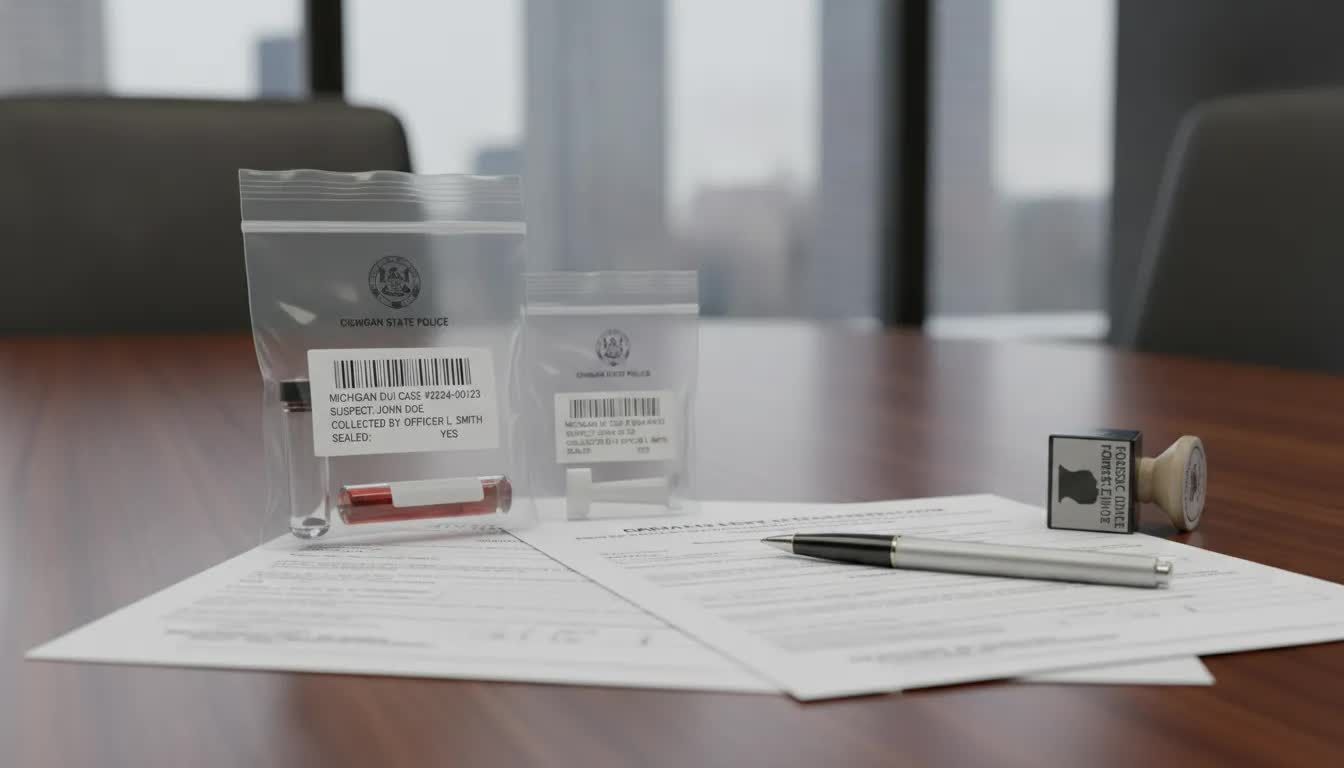
A blood-test result can play an important role in a Michigan DUI/OWI case, but the number on a lab report is only part of the story. The way a sample was collected, labeled, stored, and transferred may also deserve review. Chain of custody evidence documents those steps and helps show who handled an item and when. Gaps or inconsistencies do not automatically mean a test result will be excluded, but they can raise questions that need clear answers. If you are facing an OWI charge in Wayne County, Dearborn, or nearby, understanding how evidence was preserved can help you have a more informed conversation with a defense attorney.
Key Takeaways
What Is Chain of Custody Evidence?
Track evidence from collection through court
Chain of custody is the documented history of evidence, from its collection through its use in court or final disposition. The record can show where an item went, who handled it, and when it changed hands. This helps establish that evidence examined later is the same item collected during the investigation.
In a Michigan DUI or OWI case, those records may be relevant to a blood or urine sample, or to other evidence gathered by police. The National Institute of Justice describes chain-of-custody records as a way to help guard against evidence being substituted, damaged, contaminated, misplaced, or altered. The records do not prove that evidence is accurate on their own, but they help explain how it was handled.
Use identification and handling records to establish integrity
A chain-of-custody record should identify each item and document its handling. Depending on the evidence, it may include a unique number or label, the date and time of collection, the collector’s name, and the item’s storage location. Each transfer should show who released and received the evidence, when the handoff occurred, and why it took place.
These details give attorneys and the court a trail to review. For example, a defense attorney may check whether a sample’s label matches the lab report, whether a seal appears intact, or whether storage and access records are complete. Chain-of-custody documentation can help establish an item’s identity and handling history. If a record is incomplete, its importance depends on the circumstances and the other evidence in the case.
Track physical, biological, and digital evidence
Chain-of-custody questions can involve blood or urine samples and records related to breath testing. A DUI or OWI investigation may also produce field sobriety test notes, police reports, photographs, and recordings. The documentation used to track each item can differ, so it is important to consider what was collected and how it was preserved. DUI evidence can include several types of physical and recorded material.
Digital evidence may include body-camera or dash-camera footage, as well as related access or transfer records. Those records can help show when a file was saved, copied, or reviewed. An attorney may examine them to assess whether the footage is complete and how it was handled. A DUI/OWI defense attorney can review the evidence and its preservation as part of evaluating a case.
How Do You Document and Safeguard Chain of Custody Evidence?
A chain-of-custody record documents what happened to evidence from the time it was collected or created through testing, storage, and final disposition. In a Michigan DUI/OWI case, that history may help the parties assess evidence such as a blood sample, breath-test record, or video file. A complete record can identify who handled an item, when and where they handled it, and what they did.
Good documentation starts at collection and continues at every handoff. Each item should be clearly identified, protected from unauthorized access, and stored under conditions suited to that type of evidence. Records should also note testing, access, and any change in the item’s condition. These steps help preserve the evidence and give others a way to review its history.
Digital evidence needs its own preservation plan. A video or electronic record can include metadata and system logs that help explain when it was created, accessed, or changed. Keeping the original file and documenting how copies are made can help preserve that information.
Chain-of-custody procedures may differ depending on the evidence and the agency handling it. The National Institute of Justice’s guidance describes how custody records support the authentication of evidence. In a specific case, a defense attorney can review available records and assess whether they raise questions about reliability or handling.
Record who collected each item, when, where, and how
The first record should identify who collected or created the evidence and note the date, time, and location. It should also describe how the item was obtained. For a blood sample, for example, records may identify the person who performed the draw, where it took place, and the collection method.
Making this entry at the time of collection can help avoid gaps or later confusion. Investigators and attorneys can compare it with police reports, lab paperwork, and other records to see whether the details align. A DUI chain-of-custody overview explains why documenting each stage can help establish an item’s handling history.
Identify, label, seal, and log each item
Give each item a unique identifier and use it consistently in labels, logs, and related reports. Records may include the case number, a description of the item, and the collection date and person. For biological evidence, the container and seal should follow the applicable collection and storage procedures. The record should note the seal’s condition when the item is received or transferred.
At every handoff, document who released the item, who received it, and when the transfer occurred. Clear labels and consistent entries help distinguish items and flag discrepancies for review. If a label is unclear or a seal appears damaged, record that observation and report it through the appropriate process. Do not alter or replace a seal without documenting the reason and action taken.
Record every transfer, handler, access, test, and purpose
A custody log should account for each person who handles or accesses an item, along with the date, time, and reason. Entries may document transport to a police facility or laboratory, temporary storage, testing, and return or transfer afterward. For a handoff, identify both the person releasing the evidence and the person receiving it.
Testing records should identify the analyst, the test performed, and when it took place. They may also note whether part of a sample was used, retained, or otherwise changed during testing. These details help reviewers follow the item’s history and identify gaps that may need an explanation. The National Institute of Justice’s chain-of-custody guidance explains how such records can support evidence authentication.
Secure evidence and storage records through final disposition
Store evidence in a secure location with access limited to authorized personnel. The conditions should suit the type of item. For biological samples, for example, records may document storage location and relevant temperature checks or transfers. Each access should be recorded, whether in a written log or an electronic system.
Keep the storage history through the item’s final disposition. Records should show whether the evidence was retained, transferred, returned, or destroyed, and when that occurred. They should also identify the person who completed or authorized the action, where applicable. This gives reviewers a fuller account than collection and test records alone. If storage information is missing or unclear, an attorney can assess whether the available facts raise concerns about the evidence in the particular case.
Preserve digital originals, metadata, audit trails, and hash values
Digital evidence may include video, photographs, breath-test device files, or electronic logs. Preserve the original file in its native format when possible, and record who obtained it, when, from which device or system, and how it was transferred. Keep associated metadata and system audit trails, which may show when a file was created, accessed, or changed.
A cryptographic hash value can help check whether a digital file has changed since it was preserved. Record how and when the value was generated, and retain it with the file and custody records. If someone creates a working copy for review, document that step and protect the original. For people facing DUI/OWI charges in Wayne County or Dearborn, Boulahanis & Associates can review available evidence records and explain potential questions about how evidence was handled.
Why Does Chain of Custody Matter in Court?
Use records to authenticate evidence and support its reliability
Before evidence can be considered in court, the parties may need to show what it is and how it was handled. Chain-of-custody records document details such as who collected an item, when it changed hands, where it was stored, and when it was tested. In a Michigan DUI/OWI case, those records may help identify a blood or urine sample and explain how it reached the laboratory.
A complete record can support the evidence’s reliability, but it does not prove that a test result is accurate on its own. The court may also consider testimony, testing procedures, and other relevant records. The National Institute of Justice’s chain-of-custody guidance describes how custody records can help authenticate evidence.
Identify gaps that may suggest contamination, alteration, or mix-ups
Missing signatures, unclear transfer times, damaged seals, or unexplained periods in storage can raise questions about how evidence was handled. With a blood sample, for example, a defense attorney may check whether the label identifies the correct person, whether the seal remained intact, and whether the storage and transport records account for each step.
A gap does not prove that evidence was contaminated or switched. It can, however, prompt questions about who had access to the item and what safeguards were in place. The answers may come from other records or testimony. Reviewing the paperwork in context helps determine whether an irregularity is minor or could affect confidence in the evidence. DUI defense resources explain the role of custody records in assessing evidence.
Recognize that a break does not automatically make evidence inadmissible
An error or missing entry in the chain of custody does not automatically mean a judge will exclude the evidence. The effect depends on the specific gap, the type of evidence, the records available, and whether witnesses can explain what happened. A court may allow the evidence while permitting the defense to challenge how much weight it deserves. A more significant issue may support a challenge to its admissibility.
The key is to assess what the gap means, rather than simply count incomplete forms. Can the item still be identified? Is there a reliable account of how it was handled? Does the missing information create a meaningful risk of contamination or confusion? The National Institute of Justice notes that chain-of-custody concerns may affect whether evidence is admitted or how much weight it receives.
Weigh recordkeeping issues alongside other evidence
Chain-of-custody records are one part of a DUI/OWI case. A defense attorney may compare them with laboratory reports, officer testimony, breath-test records, video, and details of the traffic stop. If a blood sample’s handling is unclear, the attorney may also review how it was collected and tested, and whether the result is consistent with other evidence.
This broader review helps show whether a paperwork issue has practical importance. A minor clerical mistake may be clarified by other records, while an unexplained gap may raise questions about identification or handling. Someone facing a charge in Wayne County, Dearborn, or Canton Township can ask a Michigan DUI/OWI defense attorney to review the evidence and explain what options may be available, including any implications for driving privileges.
How Does Chain of Custody Apply to DUI/OWI Evidence?
A Michigan DUI/OWI case may involve chemical-test results, officer observations, and recordings. Chain-of-custody records help show how evidence was collected, handled, stored, and presented. Reviewing those records can help identify questions about whether an item is complete and reliable. A recordkeeping issue does not automatically mean evidence will be excluded. Its significance depends on the circumstances and applicable legal rules.
Track blood and urine samples through collection, sealing, transport, storage, and lab testing
Blood and urine samples should have a documented path from collection through laboratory analysis. Records may identify who collected a sample, when and where collection occurred, how the container was labeled and sealed, and who received it at each stage. Lab documentation may also show when the sample was opened, tested, stored, or transferred.
A defense review can look for mismatched labels, damaged seals, missing entries, or unexplained delays and storage conditions. These issues may raise questions about how a sample was handled, but they do not automatically invalidate a result. The chain-of-custody process helps document an item’s history and support its integrity.
Document breath-test device records, test sequences, calibration, and maintenance
Breath-test evidence involves more than the number on a test report. Relevant records may include the device’s identification, the testing sequence, operator qualifications, and calibration and maintenance history. Depending on the test and applicable procedures, records may also document required observation periods or diagnostic checks.
A lawyer reviewing a Michigan OWI case can compare the test result with the device records and the officer’s report. Missing or inconsistent information may provide a basis to question the result, depending on the facts and applicable rules. Requirements differ among jurisdictions, so descriptions of another state’s procedures should not be treated as Michigan law. The focus is whether the records in the specific case support the test’s reliability.
Record field sobriety test observations, reports, and recordings
Field sobriety evidence may include an officer’s written observations, instructions given to the driver, performance notes, and video from a patrol car or body-worn camera. These records can help explain what the officer asked the driver to do and what the officer observed. They may also capture relevant conditions, such as the testing location, lighting, weather, footwear, or a physical limitation reported by the driver.
When recordings are available, they can be compared with written reports to check whether the accounts are consistent. Missing footage or differences between a report and a recording may raise questions, but neither issue determines the outcome on its own. A defense attorney can assess how the test records fit with the other evidence and the circumstances of the stop.
Preserve video and digital records, access histories, and authenticity
A DUI/OWI investigation may generate body-camera or dashboard-camera video, booking footage, dispatch records, and electronic test data. Preserving original files matters because metadata and system records may help establish when a file was created, whether it was changed, and who accessed or copied it. A complete record can also help identify missing segments or explain how a recording moved between systems.
Digital evidence should be reviewed in context, rather than relying on a short clip or exported copy alone. The National Institute of Justice’s guidance on chain of custody explains how records can document where evidence traveled and who handled it. In a particular case, an attorney can request and assess relevant original files and access records.
Document transfers and responsibilities across handlers and agencies
Evidence may pass through several people, including the arresting officer, evidence-room staff, a courier, and laboratory personnel. Transfer records should identify when an item moved, who released and received it, and why it was transferred. Different agencies may keep separate logs, so understanding the full history can require reviewing records from more than one source.
A defense review can compare those records for unexplained gaps, unclear entries, or conflicting dates and names. A missing signature or incomplete log does not automatically make evidence inadmissible. Its importance depends on the item, the circumstances, and the applicable court rules. If you are facing a DUI/OWI charge in Wayne County or Dearborn, a Michigan DUI defense attorney can review the evidence history and explain potential issues in your case.
How Can Chain-of-Custody Problems Affect a DUI/OWI Case?
Review labels, seals, logs, transfer records, and storage conditions
A chain-of-custody review traces evidence from collection through testing and, if needed, presentation in court. For a blood or urine sample, that may involve comparing the identifying information on the container with lab paperwork, then checking transport and storage records. For breath-test evidence or video, the review may include device records, file details, and access history.
Look for mismatches in names, dates, times, labels, or seal numbers, as well as gaps in transfer logs. These issues do not prove that evidence was altered or misidentified, but they may raise questions about whether it remained secure and reliable. A detailed chain-of-custody record helps show who handled evidence and what happened to it at each stage.
Check for missing signatures, unclear entries, damaged seals, or unexplained access
Check whether the records identify each person who handled the evidence and explain when it changed hands. Missing signatures, hard-to-read entries, unexplained corrections, damaged seals, and unclear storage records may all deserve a closer look. If a sample was stored in a place accessible to others, the records may also need to show who had access and when.
A documentation issue does not automatically mean a Michigan court will exclude evidence. The question is whether the evidence can be reliably identified and whether the records and testimony account for how it was handled. A gap may give the defense a reason to question the evidence’s reliability or challenge its use. The common chain-of-custody concerns include missing or inconsistent records, though the rules and outcome depend on the facts and applicable Michigan law.
Ask a DUI/OWI defense attorney to assess reliability and possible admissibility challenges
A DUI/OWI defense attorney can compare evidence labels, lab reports, transfer records, and witness accounts to identify inconsistencies. Depending on the case, the review may also include blood collection procedures, breath-test device records, or digital evidence files. The attorney can assess whether a problem affects the evidence’s reliability and whether there is a basis to challenge its admission or the weight a court should give it.
A chain-of-custody concern does not guarantee that evidence will be excluded or charges dismissed. The outcome depends on the evidence, the records available, and the applicable legal standards. If you are facing an OWI charge in Wayne County or Dearborn, Boulahanis & Associates can review your situation and discuss possible defense options during a free initial consultation.
Consider potential effects on the case and Michigan driving privileges
If evidence is found unreliable or does not meet the requirements for admission, the prosecution may have less evidence to rely on. The effect can vary: a court may limit how the evidence is used, or the issue may have a greater impact if the evidence is central to the case. A missing signature or paperwork gap alone does not guarantee reduced charges or dismissal.
Driving privileges can involve separate legal consequences. A concern about one piece of evidence does not automatically resolve a license suspension or restriction. An attorney can help explain how the criminal case and any license matter may affect you, including deadlines that could apply. The Michigan OWI statute outlines key rules for OWI offenses, but your options depend on the facts and the status of your case.
Frequently Asked Questions
Does a chain-of-custody error automatically keep DUI/OWI evidence out of court? No. A missing entry or other irregularity does not automatically make evidence inadmissible. The court may consider whether the item can still be identified and whether other records or testimony explain how it was handled.
What evidence in a DUI/OWI case may have chain-of-custody records? Records may relate to blood or urine samples, breath-test devices, and digital files such as body-camera or dashboard-camera footage. The documents vary by evidence type and may include collection, transfer, testing, storage, or access information.
What should I do if I think evidence records contain a mistake? Keep any paperwork you received and note what seems inconsistent, such as a date, label, or test result. Avoid drawing conclusions from one entry alone. A defense attorney can compare the records with reports, test documents, and other evidence.
Can a chain-of-custody issue affect my driver’s license? It may affect the evidence in a criminal case, but it does not automatically resolve a license suspension or restriction. Driving privileges can involve separate procedures and deadlines, so ask an attorney how both matters apply to your situation.
When should I speak with a Michigan DUI/OWI defense attorney? Consider seeking legal advice as soon as possible after an arrest or charge, especially if you have questions about testing evidence or a license notice. Boulahanis & Associates offers a free initial consultation for people facing DUI/OWI matters in Wayne County and the Dearborn area.