An out-of-state DUI defense lawyer can help you handle charges and protect your license. Learn what steps to take if you are facing a DUI away from home.

A New Jersey DWI arrest can create uncertainty long after you return to Michigan. You may be unsure what the court expects, whether you need to appear in person, or whether the case could affect your home-state driving privileges. An out-of-state DUI defense lawyer licensed in New Jersey can guide you through the New Jersey charge and court process. A Michigan lawyer can answer questions about Michigan records and license status. Neither role should be confused with the other. If you are in Wayne County or the Dearborn area, Boulahanis & Associates offers a free initial consultation about Michigan license concerns. This article outlines practical steps to take and questions to ask.
Key Takeaways
What Does an Out-of-State DUI Defense Lawyer Do?
If you live in Michigan and were arrested for driving while intoxicated in New Jersey, you may need to address both the New Jersey case and possible effects on your Michigan driving privileges. A New Jersey defense lawyer handles the charge under New Jersey law, reviews the evidence, and explains the court process. A Michigan attorney can advise you about separate questions involving your Michigan license and record.
These are related concerns, but they are not the same legal matter. New Jersey counsel should explain what the New Jersey court requires, while Michigan counsel can discuss how Michigan may respond to information about the case. The lawyers can coordinate when appropriate, but be sure you know who is responsible for each issue.
Returning home does not make a pending charge disappear. Keep court notices, follow instructions, and ask a lawyer what you need to do next. The New Jersey DWI guidance for out-of-state drivers explains why an out-of-state charge still requires attention. For questions about Michigan driving privileges, Boulahanis & Associates offers a free initial consultation. You will generally need New Jersey-licensed counsel to represent you on the New Jersey charge.
Why You Need New Jersey-Licensed Counsel for a New Jersey DWI
A lawyer licensed in New Jersey can advise you on the laws that apply to your charge and represent you in New Jersey proceedings. That matters even if you live and hold a driver’s license in Michigan, because the case is handled under the law where the alleged offense occurred. A Michigan lawyer who is not authorized to practice in New Jersey generally cannot serve as your counsel in that state’s case.
New Jersey counsel can review court notices, explain deadlines, communicate with the prosecutor, and help you understand whether you need to appear. Do not assume that leaving the state ends your obligations or that a missed court date will be excused because you live elsewhere. The New Jersey DWI information for out-of-state drivers also notes that a conviction may be reported to a driver’s home state, where it could affect the person’s record or license.
How New Jersey Counsel Can Coordinate With Michigan Counsel on License Concerns
New Jersey counsel handles the charge and court process in New Jersey. A Michigan attorney can advise you about separate questions involving your Michigan license, driving record, or possible action by Michigan authorities. When both states are involved, ask each lawyer to clarify what they will handle and what information they need from you.
New Jersey may impose penalties or restrictions related to driving in that state, while Michigan may separately consider the case under its own laws. The effect on your Michigan privileges depends on the circumstances and applicable rules, so do not assume that an outcome in one state automatically settles the other state’s requirements. A New Jersey law firm’s overview of out-of-state DWI cases explains this distinction. For Michigan-specific concerns, you can discuss your situation with Boulahanis & Associates, which offers a free initial consultation.
How Counsel Reviews the Stop, Breath or Blood Tests, and Field Sobriety Evidence
A defense lawyer can review how the case began and how evidence was collected. That may include the reason for the traffic stop, whether a checkpoint followed applicable rules, the officer’s observations, and how field sobriety exercises were conducted. Counsel can also examine breath or blood test records, police reports, and other evidence for issues that may matter to your defense.
The review depends on the facts of your case. Your lawyer may compare reports with test records and witness accounts, then explain any concerns and their potential significance. Finding an inconsistency does not guarantee that evidence will be excluded or that the charge will be dismissed. It can, however, help you understand the evidence and make informed decisions about your options. DWI defense guidance for out-of-state cases describes common areas of review, including the stop, chemical test results, and eyewitness accounts.
How Counsel Clarifies Court Dates, Required Appearances, and Remote Options
Living out of state can make court dates and travel harder to manage. New Jersey counsel can review your notices, explain upcoming deadlines, and confirm whether you must attend each proceeding in person. Do not assume that you can miss a hearing or appear remotely simply because you live in Michigan. Options depend on the court, the proceeding, and the details of your case.
Send your lawyer every citation, release document, and court notice as soon as you can. Ask which dates require your attendance, what could happen if you miss one, and whether your lawyer can appear for you at any hearing. Counsel can check available options with the court and help you plan if travel is necessary. The New Jersey guidance for out-of-state drivers emphasizes that leaving the state does not end a pending case. Confirm instructions with your lawyer before changing travel plans or missing a court date.
How Can a New Jersey DWI Charge Affect Your License and Record?
A New Jersey DWI charge can raise two separate concerns for a Michigan driver: the outcome of the New Jersey case and any later effect on your Michigan driving record or privileges. New Jersey handles the charge under its own laws. The consequences can depend on factors such as the evidence, the outcome of the case, and any prior DWI history. An arrest or charge is not the same as a conviction, so the possible penalties should not be treated as a prediction of what will happen.
New Jersey may impose restrictions on your right to drive in that state, but it does not directly issue or suspend a Michigan driver’s license. Michigan may receive information about the case and consider whether its own laws call for action. Those are separate processes, and the result in one state does not automatically determine the result in the other. The Law Offices of Jonathan F. Marshall’s out-of-state DWI guidance explains this distinction.
To protect your interests, speak with a New Jersey-licensed attorney about the case and its court requirements. Ask a Michigan attorney to review any possible effect on your home-state license. Drivers in Wayne County or the Dearborn area can contact Boulahanis & Associates for a free initial consultation about Michigan license concerns. The firm’s consultation does not replace New Jersey counsel for the New Jersey case.
New Jersey May Impose Fines, Suspension, Ignition Interlock, IDRC Requirements, Surcharges, or Jail
A New Jersey DWI conviction may result in fines, a suspension of your driving privilege in New Jersey, ignition-interlock requirements, participation in the Intoxicated Driver Resource Center (IDRC), surcharges, or jail in some circumstances. Which penalties may apply depends on the facts and the applicable law, including prior DWI history. A general list cannot tell you what outcome to expect in your case.
Ask New Jersey counsel to explain the potential consequences, any steps you may need to complete, and the deadlines that apply. The New Jersey DWI information from Lomurro Law describes penalties that may follow a conviction. Your attorney can assess how the allegations and evidence in your case affect that general information.
A New Jersey Suspension Can Limit Your Right to Drive in the State
New Jersey may restrict your right to drive within the state as part of a DWI case. For a driver with a Michigan license, that restriction is distinct from New Jersey directly suspending the Michigan-issued license. Still, it can matter if you need to drive in New Jersey. Driving there while your privilege is suspended or restricted may create further legal problems.
Ask New Jersey counsel whether a restriction applies, when it takes effect, and where it limits your driving. Do not assume that a valid Michigan license gives you permission to drive in New Jersey if the state has suspended your privilege there. The New Jersey out-of-state DWI guidance discusses the difference between a state’s authority over driving within its borders and the status of an out-of-state license. Check your Michigan status separately before driving at home.
Michigan May Separately Affect Your Record or Driving Privileges
Michigan may receive information about an out-of-state DWI and assess the case under Michigan law. Depending on the case outcome and the rules that apply, the matter could affect your Michigan driving record or privileges. The effect is not necessarily automatic, and it may depend on factors such as the final disposition and how Michigan treats the reported conduct.
Ask a Michigan attorney to review your situation and explain whether you need to take action with the state. This is especially important if you receive a notice or are unsure whether your license remains valid. Rudnick Law’s overview of out-of-state DUI cases discusses how a driver’s home state may consider an out-of-state offense. New Jersey counsel can address the pending case, while Michigan counsel can focus on your home-state driving concerns.
Interstate Reporting Does Not Make New Jersey and Michigan Penalties the Same
States may share information about driving offenses through interstate reporting systems and agreements. That information sharing does not mean New Jersey and Michigan have identical laws, penalties, or procedures. New Jersey applies its laws to the case there; Michigan may separately decide whether the reported outcome has consequences under Michigan law.
A New Jersey case result alone does not tell you exactly what Michigan will do. The Rudnick Law discussion of out-of-state DUI cases explains that a home state may consider an out-of-state conviction under its own rules. Ask Michigan counsel how the specific New Jersey disposition may be treated. Avoid assuming that the two states will respond in the same way or impose matching penalties.
Address New Jersey Court Requirements and Michigan License Issues Separately
Keep the New Jersey court case and your Michigan license concerns on separate task lists. New Jersey counsel can explain required appearances, filings, deadlines, and case strategy. Michigan counsel can review notices from the Michigan Secretary of State, help clarify your driving status, and advise you about steps that may apply to your privileges. The attorneys can coordinate, but you still need to meet the requirements in each state.
Share relevant paperwork with both attorneys, including citations, court notices, test records, and any correspondence from Michigan. Ask each attorney which tasks they will handle and what you must do yourself. If you live in Wayne County or near Dearborn, Boulahanis & Associates can discuss Michigan license concerns during a free initial consultation. You will still need New Jersey-licensed counsel to advise you on and represent you in the New Jersey case.
What Should You Do After a New Jersey DUI Arrest?
If you live in Michigan and were arrested for driving while impaired in New Jersey, you may need to address two separate concerns: the New Jersey court case and the status of your Michigan driving privileges. Start by keeping your paperwork in order and noting any dates or instructions. Do not assume that having a Michigan license means you can ignore a New Jersey court notice.
New Jersey calls impaired-driving offenses DWI. New Jersey law governs the charge and court process, so speak with a lawyer licensed in New Jersey about your case. A Michigan lawyer can advise you separately about your Michigan license. The New Jersey Motor Vehicle Commission’s DWI information outlines general state requirements, but your next steps depend on your situation and the documents you received.
The actions below can help you prepare for a conversation with counsel. They are not a substitute for legal advice based on the facts of your case.
Save Citations, Court Notices, Release Papers, and Test Documents
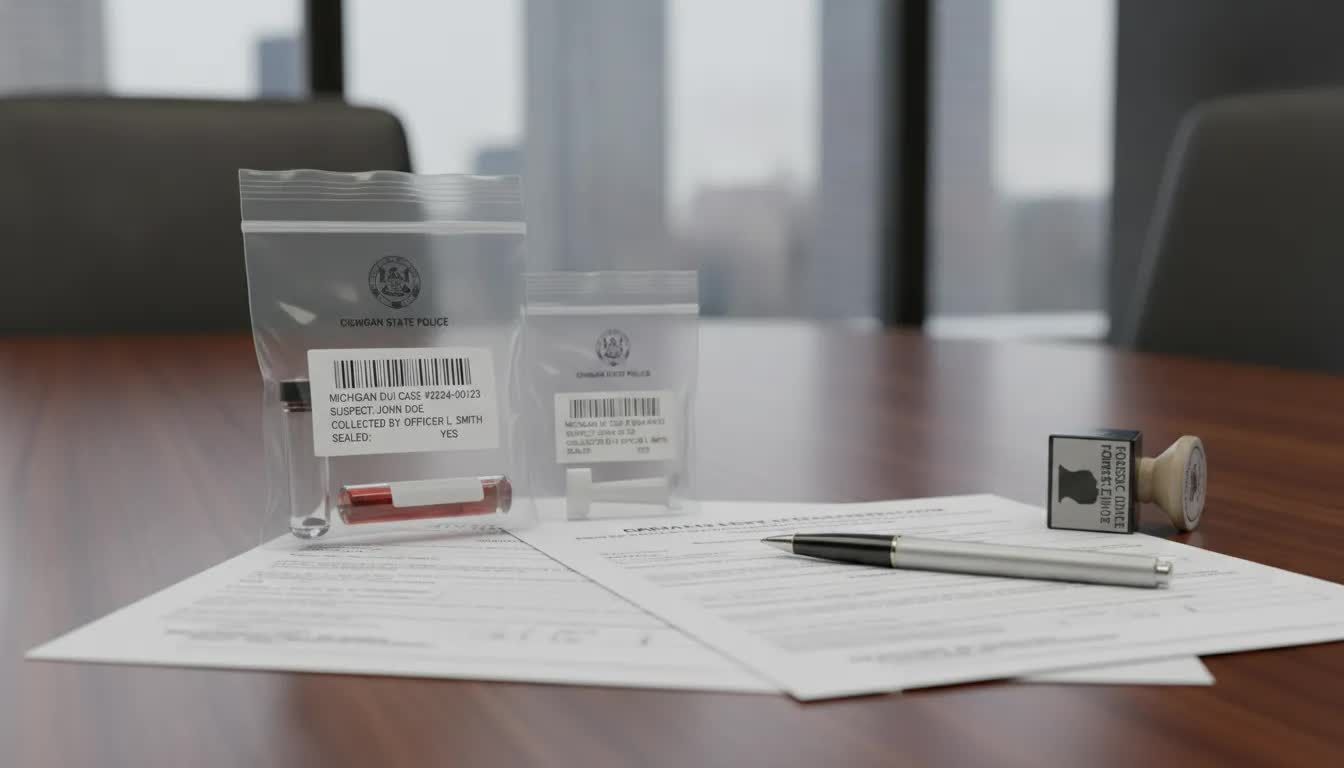
Keep every document you received after the arrest, including a summons or citation, release papers, court notices, and paperwork about breath or blood testing. Scan or photograph each page, then save a copy somewhere you can access from home. Keep the originals together in a folder, and avoid writing on or discarding them.
These documents may identify the charge, the court handling the case, scheduled dates, and instructions you need to follow. If an officer or court gave you instructions verbally, write down what you recall and tell your lawyer. Do not guess about a form you find confusing. The New Jersey Courts’ municipal court resources provide general information about municipal courts; ask New Jersey counsel to explain what your specific paperwork requires.
Record What You Recall and Preserve Relevant Messages
Write down what you remember about the stop and arrest as soon as you can. Include the approximate time and location, what you were told about the reason for the stop, questions the officer asked, and what happened during any roadside exercises or chemical testing. Note who was present and relevant conditions, such as lighting, weather, or the road surface.
Keep your account factual. You do not need to decide whether anyone acted improperly. Preserve messages, emails, call logs, receipts, and rideshare records that may help establish a timeline. Avoid deleting relevant material or discussing details publicly on social media. Share your notes and records with your lawyer so they can decide what may be useful when reviewing the case.
Track Deadlines and Follow Court Instructions From Home
Add every court date and deadline listed in your paperwork to your calendar, and set reminders well in advance. Read each notice carefully. If you are unsure what it requires, contact your New Jersey lawyer promptly instead of waiting until the deadline is close. Keep copies of written communications and make a note of calls about your case.
Do not assume you can attend court remotely because you live in Michigan. Whether you must appear in person, or whether a remote option is available, depends on the court and the circumstances. Confirm the arrangements with your lawyer and follow the court’s instructions. The New Jersey Courts’ municipal court page offers general court information, but your lawyer should verify the requirements for your case.
Ask New Jersey Counsel About Evidence, Hearings, and Appearances
A lawyer licensed in New Jersey can explain the charge and review the evidence under New Jersey law. Ask how they will assess the traffic stop, the officer’s observations, any field sobriety exercises, and breath or blood test results. You can also ask whether hearings or other proceedings may require your participation.
Explain that you live in Michigan and ask which court dates you must attend in person. Find out whether your lawyer may appear for you when the court allows it, how you will receive updates, and what could change the schedule. Bring your paperwork and written timeline to the consultation. The New Jersey Courts’ municipal court information can help you understand the general court system, but counsel should confirm what applies to your case.
Ask Michigan Counsel Before Driving if Your License Status Is Unclear
A New Jersey DWI case and your Michigan driving privileges are connected concerns, but they are separate legal questions. If you receive a suspension notice, learn that your license status may have changed, or are unsure whether you can drive, do not rely on assumptions. Confirm your status with a Michigan lawyer or the appropriate state agency before driving.
The Michigan Secretary of State’s reinstatement information explains common steps for restoring driving privileges. Your situation may require individual guidance, especially if an out-of-state case affects your ability to drive in Michigan. Boulahanis & Associates handles DUI and license concerns in Wayne County and the Dearborn area. If you need help with a Michigan license issue, contact the firm through its website, and keep your New Jersey lawyer informed as you address both matters.
How Do You Choose an Out-of-State DUI Defense Lawyer?
If you live in Michigan but face a DWI charge in New Jersey, you’ll need counsel who can handle the case in New Jersey and keep you informed from a distance. Ask about the attorney’s experience, how they’ll review the evidence, and what to expect from court appearances. If you’re concerned about your Michigan driving privileges, discuss that separately with a Michigan attorney. Each state’s rules and procedures differ, so make sure you know who is responsible for each part of your situation.
Confirm New Jersey Licensure and DWI Experience
Start by confirming that the attorney is authorized to practice in New Jersey. The New Jersey Courts attorney search lets you check an attorney’s status. Then ask how often they handle DWI cases and whether they have represented drivers who live outside New Jersey.
Ask about experience with circumstances similar to yours, such as a first offense, a prior DWI, a breath-test refusal, or a felony charge. A lawyer should be able to explain their approach and identify what they still need to learn, without promising a particular result. Before hiring them, clarify the fee, what services it covers, and whether additional costs may apply. Fees can vary depending on the facts of the case and the work involved, as Helmer Legal’s discussion of New Jersey defense costs explains.
Ask How Counsel Will Review the Stop, Tests, and Other Evidence
Ask how the attorney will examine the traffic stop and the evidence gathered afterward. Depending on your case, that may include the officer’s observations, field sobriety tests, breath or blood test procedures, video footage, and arrest records. Find out which records the lawyer plans to request, how they’ll review them, and whether expert analysis may be useful.
You don’t need to decide whether the evidence is strong or weak before speaking with counsel. Instead, share what you remember and ask which details may matter, such as why the officer stopped you or how a test was administered. A thorough review can help identify questions to investigate, but it cannot guarantee a specific outcome. Understanding the potential consequences can also help you prepare informed questions. Rudnick Law’s overview of New Jersey DWI costs and consequences discusses how the impact may extend beyond the initial penalties.
Discuss Court Appearances, Communication, and Coordination With Michigan Counsel
Ask which court dates you must attend in person and whether any appearance may be handled remotely. Don’t assume you can miss a hearing because you live in Michigan. Your New Jersey attorney should confirm appearance requirements, explain what to expect, and let you know if the schedule changes.
Agree on how you’ll communicate, who your main contact will be, and how quickly you can expect a response. If you consult a Michigan attorney about your driving privileges, ask whether the New Jersey lawyer will coordinate with them. Confirm what information you authorize the attorneys to share. Discussing appearances early can also help you plan for travel and understand possible legal costs. This Avvo response notes that representation costs can depend in part on arrangements for court appearances.
Read Client Feedback About Communication and Service
Client reviews can offer a sense of how a law office communicates, explains the process, and responds to questions. Look for recurring details across several reviews, such as whether clients felt informed about deadlines and received clear updates. Reviews are only one source of information: a rating doesn’t confirm a lawyer’s credentials or predict what will happen in your case.
Focus on feedback about the service, not just the outcome. DWI cases vary, so another person’s result may not reflect your circumstances. During a consultation, notice whether the attorney listens, answers directly, and explains what they still need to investigate. Ask who will provide routine updates and whether you’ll speak with the attorney or another team member. You can also review the lawyer’s website for information about their services and approach, then use your conversation to decide whether their communication style works for you.
Clarify Who Handles the New Jersey Charge and Michigan License Concerns
Before hiring counsel, make sure you understand each attorney’s role. A New Jersey lawyer should explain how they’ll handle the DWI charge and related court proceedings. If you’re worried about your Michigan driving record or privileges, ask a Michigan attorney what the New Jersey case could mean for you and what to do before driving if your license status is unclear.
Don’t assume that resolving the charge in one state automatically settles every issue in the other. Confirm who will track deadlines, obtain records, and tell you when a decision may require action in both states. Get the fee, scope of representation, and communication plan in writing. Boulahanis & Associates represents people facing DUI charges and license concerns in Wayne County and offers a free initial consultation. For the New Jersey charge, make sure you also retain counsel authorized to appear in New Jersey.
What Does an Out-of-State DUI Defense Lawyer Cost?
There is no standard fee for defending a New Jersey DWI charge when you live in Michigan. The cost depends on the facts of the case, the services included, and how much work the defense requires. Reviewing evidence, filing motions, attending hearings, and preparing for trial may all affect the fee. Prior offenses and the circumstances of the stop can also shape the work involved.
Use online estimates as a starting point, not as a promise of what your case will cost. One New Jersey firm publishes a general DWI lawyer fee estimate, but your actual fee will depend on your situation and the agreement you make with counsel. Ask for a written explanation of the fee, including what happens if the case requires more work than expected.
It also helps to keep the New Jersey charge separate from questions about your Michigan driving privileges. New Jersey-licensed counsel can represent you on the New Jersey case. A Michigan attorney can discuss Michigan-specific license concerns. Clarifying each lawyer’s role can help you understand what services you need and what each one will cost.
Ask What the Fee Covers and What Extra Costs May Apply
Before hiring a lawyer, ask for a written description of the services covered by the fee. Does it include reviewing discovery, communicating with the prosecutor, appearing at expected hearings, filing motions, and preparing for trial? Ask what may cost extra, such as expert witnesses, investigation, transcripts, travel, or additional court appearances.
Fee arrangements vary. Some lawyers charge a flat fee for a defined scope of work; others bill hourly or charge separately if the case goes to trial. Read the agreement carefully and ask how added work will be approved and billed. An attorney’s explanation of DWI fees notes that costs depend on the lawyer and the agreement. Make sure you understand those terms before signing.
Ask How Hearings, Case Complexity, and Evidence Review Affect Fees
The number of court appearances and the work required to prepare your defense can affect the fee. Ask whether the quote includes expected hearings, motions, and trial preparation, and what happens if the case requires additional proceedings. Also ask how the lawyer will review evidence such as the traffic stop, breath or blood test records, and field sobriety tests.
Other factors may include prior offenses, the test results, and whether the case goes to trial. A New Jersey DWI defense firm identifies these as factors that can affect attorney fees. Ask counsel which details in your case may change the cost, and request an updated estimate if the scope of work changes.
Discuss Payment Terms and How Counsel Will Update You
Ask when payment is due, whether installment payments are available, and how the firm will bill for work outside the initial agreement. Confirm who will answer your questions and how you will receive updates. Since you live out of state, ask whether the firm will share court notices, deadlines, and case developments by phone, email, or a client portal.
Agree on how you will be contacted if a hearing is scheduled or the case changes. Keep a copy of the fee agreement with your court documents, and ask for written clarification before approving additional fees. Clear communication can help you plan for travel and other responsibilities, but it does not replace following court instructions. Ask your lawyer directly whether you need to attend each court date.
Use Boulahanis & Associates’ Free Consultation to Discuss Michigan License Concerns
Boulahanis & Associates offers a free initial consultation for people dealing with DUI and license concerns in Wayne County and the Dearborn area. You can use the time to explain how a New Jersey charge may relate to your Michigan driving privileges and ask what information the firm needs to assess your concerns. Bring your citation, court paperwork, and any notices about your license.
The firm’s consultation information can help you take the next step on Michigan-specific questions. A Michigan consultation does not replace representation by a lawyer licensed in New Jersey for a pending New Jersey charge. Ask Boulahanis & Associates what services it can provide in your situation, whether it can coordinate with New Jersey counsel, and what any Michigan-focused representation would cover.
Arrange New Jersey-Licensed Counsel for Your Pending Charge There
For a pending New Jersey DWI charge, look for a lawyer licensed in New Jersey who regularly handles DWI cases there. Ask about their experience with the court handling your case, who will appear on your behalf, and which appearances the fee includes. Before making travel plans, confirm with counsel whether you must attend each court date. Do not assume you can appear remotely.
Ask the New Jersey lawyer to explain the fee and the scope of representation in writing. If you also need advice about Michigan license concerns, speak with Michigan counsel and clarify who is responsible for each issue. One New Jersey firm, for example, publishes a general DWI fee range, but estimates do not replace a case-specific quote. A written agreement from each lawyer can help you understand costs and avoid confusion about overlapping services.
Frequently Asked Questions
Do I need a New Jersey lawyer if I live in Michigan?Yes. A New Jersey-licensed lawyer can advise you on the charge and represent you in New Jersey court. A Michigan attorney can separately address questions about your Michigan driving privileges.
Can I ignore a New Jersey court date because I live out of state?No. Living in Michigan does not cancel your court obligations. Ask your New Jersey lawyer whether you must appear and whether the court allows any alternative, such as a remote appearance.
Will a New Jersey DWI automatically suspend my Michigan license?Not necessarily. New Jersey and Michigan handle driving privileges under their own laws. Ask a Michigan attorney to review your case and any notices you receive before assuming your license status has or has not changed.
What should I bring to a lawyer consultation?Bring your citation, court notices, release papers, test-related documents, and any Michigan license notices. A written timeline of what you remember about the stop can also help counsel understand the situation.
Can Boulahanis & Associates represent me in the New Jersey case?The firm offers a free initial consultation about Michigan driving privilege concerns, but you generally need a lawyer authorized to practice in New Jersey for the New Jersey charge. Ask each attorney to clarify their role and fees.