Michigan DUI Sobriety Court: What to Know
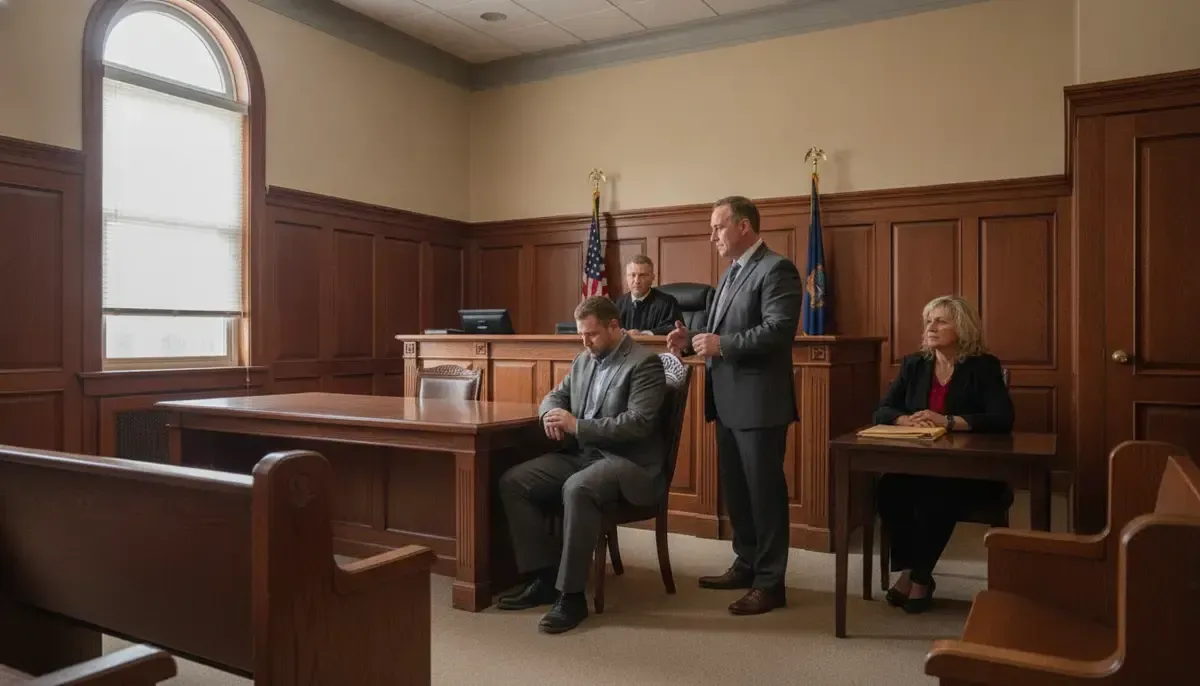
Michigan DUI sobriety court is a specialized court docket, not a promise about your case. Michigan law creates DWI/sobriety courts and a related specialty court interlock program. A local court still has to be certified, and a statute does not decide whether you will be admitted. Start with the written rules, then ask a lawyer how they relate to the charge, the record, and any separate license notice.
Call now for a free initial consultation using the phone number on the Boulahanis & Associates contact page. A free consultation is a chance to talk through the situation. It is not free representation.
Three questions get mixed together. What is a sobriety court? What does one local program require? What legal result might follow? This article covers the first question at a general level. Local handbooks and case papers answer the second. Only a lawyer who has read your file can help with the third. Nothing here is a finding of eligibility or legal advice for a particular matter.
What Michigan DUI sobriety court means
Michigan Compiled Laws section 600.1084 creates the DWI/sobriety court and the specialty court interlock program. The statute defines a DWI/sobriety court as a specialized docket and programs in circuit and district courts. Those programs are designed to reduce recidivism among alcohol offenders. They must follow the 10 guiding principles of DWI courts from the National Center for DWI Courts.
That definition is statewide orientation. It is not a roster of which courts run a program this month, and it is not an application form. A private treatment plan or a support group is not the same thing. A sobriety court operates inside a criminal case, with court oversight.
You can read MCL 600.1084 on the Michigan Legislature site. The page says the compiled laws are complete through Public Act 114 of 2026. Confirm the current text before you rely on any subsection. The Michigan courts problem-solving courts page is a second official starting point for how the court system groups these dockets.
Wayne County outside Detroit is the firm's core area, with a published office in Dearborn and work that also reaches Monroe County. A service-area page is not a second office, and a local court in one city does not set the rules for another.
Certification is not the same as admission
A DWI/sobriety court in Michigan must be certified by the State Court Administrative Office. The statute uses the same certification manner required for a drug treatment court under section 1062(5). A court shall not perform sobriety-court functions unless it has that certification.
Certification is about the court. It does not mean a particular person will be placed in the program. A circuit court or a district court that wants to start a docket must be certified too. Ask whether the court handling your case is certified, and ask for the current written description of its program.
Do not treat a neighboring county's handbook as your rulebook. A list of communities the firm serves tells you where the practice focuses. It does not tell you which courthouse runs a sobriety docket or what that docket requires.
What the statute says about being considered
Section 600.1084(4) sets a statutory screen for consideration in the program. It is not a promise of admission, and it is not a complete local rule. To be considered, a person must have been convicted in one of two patterns. The convictions are for violating Michigan Vehicle Code section 625(1) or (3), or a substantially corresponding law.
The first pattern is two or more of those convictions. The second is one of those convictions preceded by one or more convictions under a substantially corresponding local ordinance, another state's law, or a United States law. The prior-conviction clause also reaches section 625(6).
Read that as a floor the statute names, not as a full application checklist. A local program can have more steps, screenings, and written conditions. Meeting a listed conviction pattern does not decide suitability, schedule, or outcome. Failing to match it is a reason to ask counsel what the statute and the local court actually require, not a reason to guess.
Attorney review is required before anyone treats this screen as a deadline, a sanction rule, or an eligibility ruling. Bring the charging papers and any prior-conviction records. Do not reconstruct a criminal history from memory in order to "qualify."
How a sobriety-court track differs from the ordinary case
An ordinary OWI case is the criminal prosecution of the charge. A sobriety-court track, where one exists, adds a structured docket that can include treatment and monitoring under court supervision. The charge, the evidence, and the procedural posture still matter. The program is not a separate world that erases the case.
It is also not a shortcut. The statute does not promise dismissal, a reduced charge, a particular sentence, or a particular license result. Joining, or asking to join, is not the same as finishing. Removal before successful completion is one of the events the statute tells the judge to report to the Secretary of State when the interlock program is involved.
Keep criminal defense, implied-consent proceedings, and other license matters distinct. One conversation about a treatment court does not automatically include the others. The firm's Michigan DUI defense overview is background on the criminal-defense side. Use it to see the practice focus, then review your own papers with a lawyer.
| Path. | Who acts. | What is being decided. | What it is not. |
|---|---|---|---|
| Ordinary OWI case. | The court hearing the charge, with the prosecutor and the defense. | The criminal case. That means the charge, the evidence, and the choices at that stage. | Not admission to a treatment docket by itself. |
| DWI/sobriety court. | A certified specialized docket inside a circuit or district court. | Whether a structured program with court oversight is available. Also, on what written terms. | Not a guaranteed dismissal, a reduced charge, or a license result. |
| Specialty court interlock program. | The specialty court judge and the Secretary of State. The statutes are MCL 600.1084 and MCL 257.304. | Whether a restricted license path is tied to admission. It also requires an interlock on each vehicle the person owns or operates. | Not ordinary probation. Not a hardship license by itself. |
Use the table to separate questions, not to score a case. If probation is already in place, read how a Michigan DUI probation modification request works instead of treating this article as that guide. If the open question is how the case was charged, the Michigan DUI charging process page covers that sequence. This post does not restate penalty ranges or breath-test science.
The specialty court interlock program is a license path
The same statute creates the specialty court interlock program. Before the Secretary of State issues a restricted license to a program participant under MCL 257.304, the specialty court judge must certify two things. The person has been admitted into the program. An interlock device has been installed on each motor vehicle the person owns or operates, or both.
That is a certification step, not a statement that a restricted license will issue. Other license rules still apply, and this article does not walk through section 304. If a notice about driving privileges arrives, keep it separate from the criminal papers and ask which proceeding it belongs to.
The statute also lists events the specialty court judge shall immediately report to the Secretary of State. Removal from the program before successful completion is one. Operating a vehicle without an interlock is another. So is tampering with, or removing, a court-ordered interlock without approval. A new charge under section 625 is on the list too. Receipt of that notice must result in summary revocation or suspension of the restricted license under section 304.
Those subsections describe reporting and license consequences inside the interlock program. They are not a catalog of every sanction a local sobriety court can use. They are also not advice about whether a restricted license is available in a given case. The firm handles some hardship-license matters in circuit court. It does not handle license-restoration cases. Do not read this overview as a restoration guide.
For a separate look at suspension issues, see how a DUI license suspension issue can differ from the criminal case. Bring both sets of papers if both exist.
What to verify before you treat a program as an option
A web page, a friend's story, or this article cannot tell you that a program is open to you. Availability, admission, and suitability are three different things. Work from the court named on your paperwork.
- Identify the court from the citation, bond papers, or hearing notice. Do not guess from a home address.
- Ask whether that court has a certified DWI/sobriety court, and ask for the current handbook or written policy. Note the date you received it.
- Ask who refers or applies, who screens, and who makes an admission decision. Write down the role, not just a first name.
- Ask what a participant must do: appearances, treatment, testing, phases, and any fees the written materials actually list. If a cost is not in writing, mark it unknown.
- Ask how the program treats missed appointments, a disputed test, or a schedule conflict, and whether notice is required in advance.
- Bring that packet to a lawyer before you apply, plead, or sign program paperwork.
Turn vague labels into concrete questions. "Regular check-ins" is incomplete until you know how often and where. Also ask what happens if work or caregiving conflicts. "Treatment" is incomplete until you know whether an assessment comes first. Ask who reports attendance. "Monitoring" is incomplete until you know the procedure and whom to call.
Costs need the same care. Do not assume the program is free, and do not assume a fee you saw somewhere else. Ask whether testing, treatment, or other expenses are listed, and whether the amount depends on the service. The firm's free initial consultation is not a quote for representation. Public fees are not listed here because they are not established.
What participation can demand day to day
Local rules vary, so a component list is a question guide. Topics people often need to verify include assessment and treatment, court reviews, alcohol or drug testing, program phases, and extra conditions in an individual plan. None of those items is universal just because the statute exists.
Map a sample week only after you have a written schedule. If you do not, write "unknown" instead of inventing times. Note work shifts, caregiving, and how long it takes to reach the court or a provider. Do not assume the program changes your right to drive. A driving restriction is its own notice.
Keep a dated folder: the handbook version, appointment slips, receipts, and what a staff member told you, labeled as a conversation rather than a rule. If two documents disagree, do not pick the friendlier one. Ask the court or your lawyer which controls.
If something is missed, preserve messages, write the sequence down, and call counsel promptly. Do not delete texts or rely on someone else's social-media story. Do not sign a new form until you know what it is. The immediate job is an accurate record, not a prediction of the sanction.
What to bring to a consultation
Gregory J. Boulahanis is the attorney named by the firm. The office published on the site is in Dearborn. Bring the papers that show where the case stands, and say which dates you still need to verify. Do not invent a deadline.
- The citation or charging document, plus any bond or hearing notice.
- Any written program handbook, referral form, or email from court staff, with the date you received it.
- Separate license or implied-consent notices, kept apart from the criminal file.
- A short timeline: incident date, court dates, and any screening step already taken.
- Practical limits: work hours, caregiving, transportation, and treatment access.
Useful questions are narrow. What does this handbook require before anyone is admitted? Which choices in the criminal case should be understood first? Does a license notice belong to a different proceeding? Who is allowed to say whether this court is certified?
Ask counsel to mark what is known and what is still open. "The handbook mentions court reviews, but not how often" is a better note than a guessed calendar. Legal deadlines, court jurisdiction, sanctions, and eligibility need that review. This article cannot supply them.
When you want that review, call the number on the contact page for a free initial consultation. The firm also describes website live chat as a contact path. There is no online booking calendar and no guaranteed response time.
Frequently asked questions
Is Michigan DUI sobriety court available in every OWI case?
No. A court must be certified before it performs sobriety-court functions, and not every courthouse runs a docket. The statute also names conviction patterns that must be met to be considered. Local rules can add more steps. None of that decides a specific person's admission.
Does sobriety court guarantee dismissal or a lighter sentence?
No. MCL 600.1084 does not promise dismissal, a reduced charge, or a particular sentence. It creates a certified docket and a related interlock program. Any legal effect depends on the written program terms, the case, and later court decisions.
Is a sobriety court the same as treatment outside court?
No. Private treatment or a support group can be part of life outside a court program. A DWI/sobriety court is a specialized docket inside a circuit or district court, with certification and court oversight. Treatment ordered in an ordinary case is a different question.
Will a sobriety court resolve a driver-license case by itself?
Do not assume that. The specialty court interlock program can tie a restricted-license certification to program admission and an installed interlock. Other license notices, including implied consent, can be separate proceedings. The firm does not handle license restoration.
Can a handbook from another county answer my court's rules?
No. Another county's materials can show the kinds of questions to ask. They do not set the terms of a different court. Get the current handbook from the court on your paperwork and have a lawyer compare it with your record.
A general overview is not a case decision
Michigan DUI sobriety court, in the statute, means a certified specialized docket. The aim stated in the law is to reduce recidivism among alcohol offenders. The same section creates a specialty court interlock program with its own license rules. It does not mean every person charged with OWI has a program available. It also does not mean admission follows if a conviction pattern looks similar.
Verify the court, the certification, the written conditions, and the separate license papers. Then talk with counsel before you apply or sign. If you want to start that conversation with Boulahanis & Associates, use the phone number above.